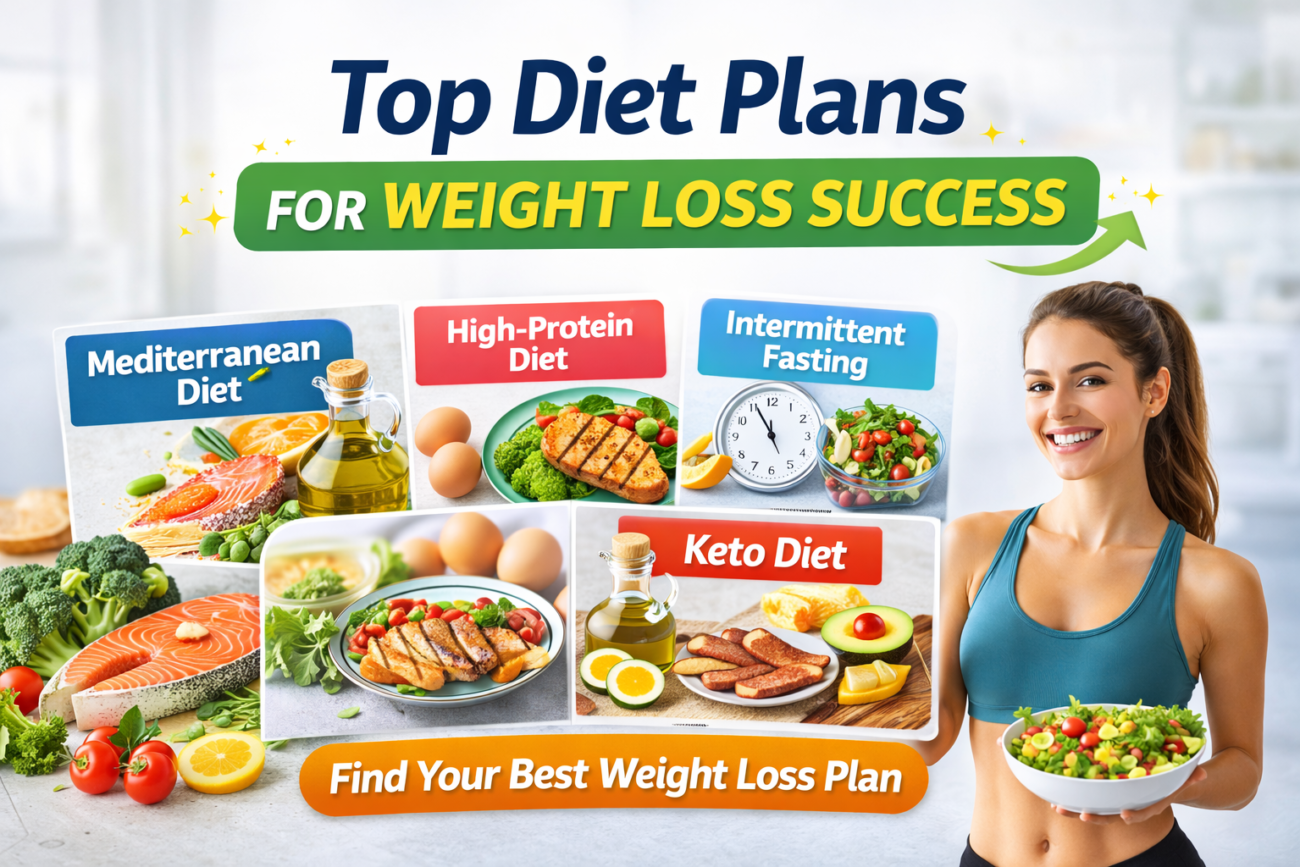
Top Diet Plans For Weight Loss Success (2026 Guide)
Losing weight isn’t about starving yourself, cutting out entire food groups overnight, or following extreme trends that leave you exhausted and frustrated. Real weight loss success comes from choosing a sustainable, science-backed diet plan that fits your lifestyle.
If you’ve ever wondered which diet actually works, which one is safest long-term, and how to choose the best option for your body, this guide breaks it all down clearly and honestly.
Below, we compare the top diet plans for weight loss success, including their benefits, challenges, and who they’re best suited for.
How Diet Plans Help You Lose Weight
At the core of every successful weight loss plan is one principle: a calorie deficit. That means consuming fewer calories than your body burns.
However, not all diet plans achieve this the same way. Some focus on reducing carbohydrates, others prioritize protein, and some limit eating windows. The best diet is the one you can realistically follow for months—not just days.
According to health authorities like the CDC, a safe and sustainable weight loss rate is about 1–2 pounds per week. Diets that promise rapid, dramatic results often sacrifice long-term success.
Let’s explore the top options.
1. Mediterranean Diet
Overview
The Mediterranean diet is consistently ranked among the healthiest diets in the world. It emphasizes:
Vegetables and fruits
Whole grains
Olive oil
Fish and lean protein
Nuts and legumes
Why It Works
This diet naturally reduces processed foods and added sugars while increasing fiber and healthy fats. It supports heart health and steady weight loss without extreme restrictions.
Pros
Sustainable long-term
Heart-healthy
No strict calorie counting required
Cons
Slower results compared to stricter diets
Requires cooking whole foods
Best For
People who want a balanced, lifestyle-focused approach to weight loss.
2. High-Protein Diet
Overview
A high-protein diet increases protein intake while moderately reducing carbohydrates and fats.
Protein-rich foods include:
Chicken
Fish
Eggs
Greek yogurt
Lean beef
Plant-based protein sources
Why It Works
Protein boosts metabolism slightly and significantly reduces hunger. It also preserves muscle during weight loss.
Many people struggle with cravings, and increasing protein intake can reduce late-night snacking and emotional eating.
Pros
Reduces hunger
Helps maintain muscle
Faster visible fat loss
Cons
Can feel repetitive
Requires meal planning
Best For
Individuals who struggle with constant hunger while dieting.
3. Intermittent Fasting
Overview
Intermittent fasting focuses on when you eat rather than what you eat. Common approaches include:
16:8 (16 hours fasting, 8-hour eating window)
5:2 method (eat normally 5 days, restrict 2 days)
Why It Works
Fasting naturally reduces calorie intake and may improve insulin sensitivity. Many people find it easier to skip breakfast than to count calories all day.
Pros
Simple structure
No food restrictions
Convenient
Cons
Difficult at first
Not ideal for everyone
Best For
People who prefer structured eating windows instead of strict food rules.
4. Keto Diet
Overview
The ketogenic diet is a very low-carb, high-fat plan that pushes the body into ketosis, where it burns fat for fuel.
Why It Works
By drastically reducing carbohydrates, insulin levels drop, and fat burning increases. Many people experience rapid initial weight loss, partly from water loss.
Pros
Fast early results
Reduced appetite
Stable energy for some
Cons
Difficult to maintain
Restrictive
May cause side effects initially
Best For
Individuals seeking faster short-term fat loss and willing to follow strict guidelines.
5. Low-Carb Diet
Overview
Less restrictive than keto, a low-carb diet simply reduces refined carbohydrates and added sugars.
Why It Works
Lowering carb intake can reduce hunger and stabilize blood sugar, making it easier to maintain a calorie deficit.
Pros
Flexible
Easier than keto
Effective for belly fat
Cons
Requires label reading
May limit some favorite foods
Best For
People who want moderate structure without extreme restrictions.
6. Calorie-Controlled Meal Plan
Overview
This is the classic approach: calculate your calorie needs and eat slightly below maintenance.
Why It Works
Weight loss is mathematically driven by energy balance. When tracked correctly, this approach works reliably.
Pros
Highly customizable
Works with any food preference
Scientifically consistent
Cons
Requires tracking
Can feel tedious
Best For
Detail-oriented individuals who enjoy data and structure.
Which Diet Plan Works Fastest?
Strict low-carb and ketogenic diets typically produce the fastest short-term results. However, fast results don’t always equal long-term success.
Research shows that sustainability matters more than speed. Many people regain weight when following highly restrictive plans.
A moderate high-protein or Mediterranean-style plan often delivers better long-term weight loss maintenance.
Which Diet Is Safest Long-Term?
The Mediterranean diet consistently ranks highest for long-term safety and heart health.
High-protein and moderate low-carb diets are also safe for most people when balanced properly.
Extreme restriction, eliminating entire food groups, or consuming extremely low calories can increase the risk of nutrient deficiencies and rebound weight gain.
How To Choose The Right Diet Plan
Ask yourself:
Can I realistically follow this for 6 months?
Does it fit my schedule?
Does it allow foods I enjoy?
Do I feel energized on it?
The best diet plan for weight loss success is one that matches your personality and lifestyle.
Realistic Expectations for Weight Loss
Healthy weight loss isn’t dramatic. It’s consistent.
Expect:
4–8 pounds per month for most people
Plateaus along the way
Gradual fat reduction
Improvements in energy and sleep
Before-and-after photos online often hide the months of discipline behind the scenes.
The real transformation happens in habits.
Supporting Your Diet Plan Naturally
While diet is the foundation, some people look for additional support to enhance metabolism and reduce cravings.
That’s where many readers begin researching natural supplements. If you’re considering this route, reading an honest CitrusBurn review can help you understand what to expect before trying it.
CitrusBurn is marketed as a metabolism-support supplement designed to complement healthy eating habits—not replace them. Like any supplement, results vary, and it works best alongside a structured diet plan such as those listed above.
The key is to view supplements as support tools, not magic solutions.
Common Mistakes That Sabotage Diet Plans
Choosing extreme restriction
Skipping protein
Ignoring sleep
Not drinking enough water
Expecting overnight results
Sustainable weight loss success depends on consistency more than perfection.
Frequently Asked Questions
What is the best diet plan for weight loss?
There isn’t one universal best diet. The Mediterranean diet, high-protein plans, and moderate low-carb approaches consistently show strong results.
How much weight can I lose in one month?
A realistic goal is 4–8 pounds, depending on your starting weight and adherence.
Is keto safe long term?
It can be safe for some individuals but is often difficult to maintain long-term. Many people transition to a moderate low-carb plan instead.
Do I need supplements to lose weight?
No. Supplements are optional and should only support a healthy diet and lifestyle.
Final Thoughts
The top diet plans for weight loss success all share one core principle: sustainability.
The Mediterranean diet supports long-term health. High-protein plans reduce hunger. Intermittent fasting simplifies structure. Low-carb options reduce cravings. Calorie-controlled approaches offer precision.
The best plan isn’t the strictest—it’s the one you can maintain consistently.
If you’re serious about transforming your health, start with a structured plan, commit to small daily improvements, and focus on steady progress over quick fixes.
Long-term success isn’t about starving. It’s about smart choices, consistency, and building habits that last.
