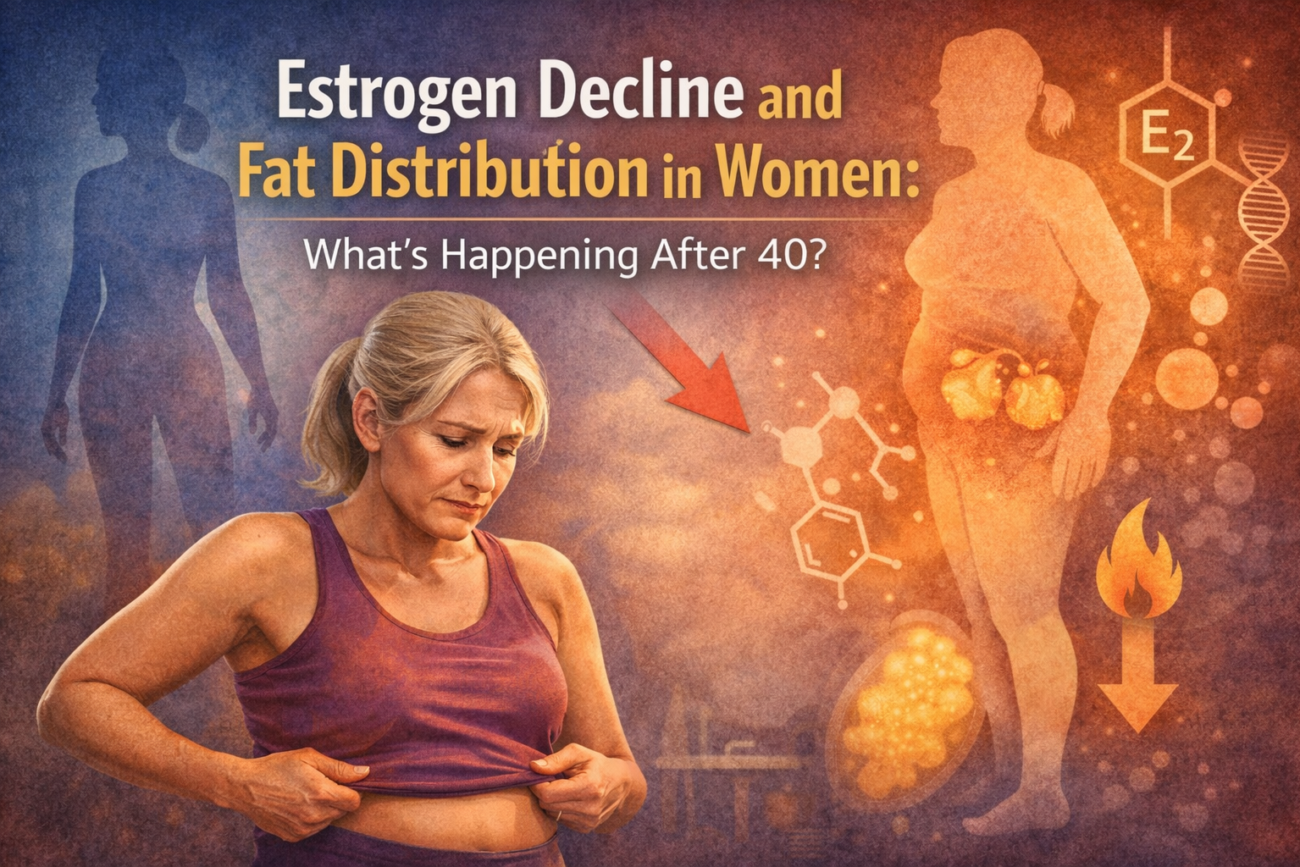
Many women reach their 40s feeling confident in their routines—only to notice subtle, frustrating changes. Clothes fit differently. Fat seems to accumulate around the abdomen instead of the hips. Weight that once came off easily now lingers. These shifts are not simply about calories or discipline. Often, they reflect a deeper biological transition: estrogen decline and weight gain during perimenopause and menopause.
Understanding how hormonal changes affect fat distribution can be empowering. Rather than viewing your body as unpredictable, you can recognize the physiological mechanisms at play and respond strategically.
Within the broader discussion of Why Weight Loss Becomes Harder After 40: Causes and Solutions, estrogen plays a central role in shaping how and where fat is stored in midlife.
The Role of Estrogen in a Woman’s Metabolism
Estrogen is not just a reproductive hormone. It influences:
Fat storage patterns
Insulin sensitivity
Appetite regulation
Muscle maintenance
Inflammation levels
When estrogen levels are stable, fat distribution in women tends to favor the hips and thighs—a pattern sometimes described as “pear-shaped.” This distribution is partly protective from a cardiovascular standpoint.
However, as estrogen levels fluctuate and decline during perimenopause and menopause, the body’s metabolic signaling shifts. This is where estrogen decline and weight gain often intersect.
Estrogen Decline and Weight Gain — What Actually Changes?
During perimenopause, estrogen levels become unpredictable before gradually declining after menopause. These fluctuations can lead to several interconnected changes:
Altered fat storage patterns
Reduced insulin sensitivity
Increased central (abdominal) fat accumulation
Changes in appetite and energy expenditure
The connection between estrogen decline and weight gain is not simply about total weight. It’s often about where fat is stored.
As estrogen decreases, the body becomes more prone to hormone-related fat redistribution, shifting from lower-body fat storage to abdominal accumulation.
Menopause Fat Gain: Why the Belly Area Becomes More Vulnerable
Many women notice that menopause fat gain centers around the midsection. This is largely due to changes in how fat cells respond to hormonal signals.
Lower estrogen levels reduce the body’s preference for subcutaneous fat storage in the hips and thighs. Instead, fat may accumulate viscerally—around the abdominal organs. This type of fat is often referred to as visceral fat after menopause.
Visceral fat is metabolically active and associated with:
Increased insulin resistance
Elevated inflammation
Higher cardiometabolic risk
This shift explains why estrogen and belly fat are frequently discussed together in midlife health research.
Perimenopause Body Changes: Fluctuation Before Decline
Before estrogen consistently declines, many women experience erratic hormonal patterns during perimenopause. These perimenopause body changes may include:
Temporary weight gain
Fluid retention
Increased cravings
Sleep disruption
The hormonal volatility itself can influence appetite regulation and insulin signaling. During this time, women may feel like their bodies are unpredictable—losing weight one month and gaining the next.
This transitional phase contributes significantly to the perception of sudden metabolic difficulty.
Estrogen and Insulin Sensitivity
One underappreciated mechanism linking estrogen decline and weight gain involves insulin. Estrogen plays a role in maintaining estrogen and insulin sensitivity—the body’s ability to efficiently use glucose for energy.
As estrogen levels decrease:
Muscle cells may respond less efficiently to insulin.
Blood sugar regulation can become less stable.
The body may store more glucose as fat.
Reduced insulin sensitivity makes abdominal fat storage more likely. Over time, this metabolic shift reinforces the development of visceral fat after menopause.
In this way, estrogen is closely tied to metabolic health—not just reproductive function.
Hormonal Fat Storage and Redistribution
The concept of hormonal fat storage reflects how endocrine signals influence where energy is stored. When estrogen levels fall:
Fat cells in the abdominal region become more active.
Lipid storage patterns shift.
Muscle preservation may become less efficient.
This contributes to hormone-related fat redistribution, where women transition from a lower-body fat pattern to a more central one.
Importantly, total body fat may not increase dramatically at first. Instead, distribution changes, which can alter clothing fit and body shape even without major weight gain.
Metabolic Effects of Low Estrogen
Beyond fat distribution, there are broader metabolic effects of low estrogen that influence weight regulation:
Slight reductions in resting metabolic rate
Increased inflammation
Changes in appetite signaling
Reduced spontaneous physical activity
These changes compound over time. While estrogen decline alone does not “shut down” metabolism, it can subtly alter energy balance.
This hormonal context helps explain why estrogen decline and weight gain often become noticeable during midlife.
For a broader exploration of how hormones, metabolism, and lifestyle interact, see Why Weight Loss Becomes Harder After 40: Causes and Solutions, which examines additional factors beyond estrogen alone.
Why Calorie Math Alone Doesn’t Explain Midlife Changes
Many women attempt to respond to midlife weight gain by simply eating less. However, extreme calorie restriction can:
Reduce lean muscle mass
Lower metabolic rate
Increase stress hormones
This approach may worsen long-term body composition. Since muscle mass supports metabolic health, preserving it becomes especially important during estrogen decline.
Rather than focusing solely on calories, strategy should emphasize metabolic resilience.
Practical, Sustainable Strategies for Midlife Women
While you cannot prevent estrogen from declining, you can meaningfully influence how your body adapts.
1. Prioritize Resistance Training
Strength training helps counteract muscle loss and supports insulin sensitivity. It is one of the most powerful tools for addressing estrogen decline and weight gain.
Benefits include:
Preserving lean muscle
Supporting metabolic rate
Reducing visceral fat accumulation
Even two to three sessions per week can make a measurable difference.
2. Support Blood Sugar Stability
Since estrogen and insulin sensitivity are connected, maintaining stable blood sugar becomes critical. Practical steps include:
Pairing carbohydrates with protein and fiber
Avoiding frequent high-sugar snacks
Eating balanced meals at regular intervals
These habits can reduce excessive fat storage signals.
3. Emphasize Protein Intake
Protein supports muscle preservation and satiety. As the body becomes less efficient at building muscle with age, adequate protein intake helps offset some metabolic effects of low estrogen.
Distributing protein evenly throughout the day can improve muscle maintenance and appetite control.
4. Protect Sleep Quality
Sleep disruption is common during perimenopause and menopause. Poor sleep increases hunger hormones and reduces insulin sensitivity, compounding menopause fat gain.
Strategies include:
Maintaining consistent sleep schedules
Limiting late-night screen exposure
Managing evening stress
Improved sleep supports hormonal balance.
5. Manage Stress Thoughtfully
Chronic stress can elevate cortisol, which may further encourage abdominal fat storage. During midlife, managing stress becomes particularly important because hormonal resilience is lower.
Mindfulness practices, walking outdoors, and social connection can buffer stress-related weight changes.
6. Avoid Extreme Diet Cycles
Repeated crash dieting can reduce muscle mass and worsen metabolic efficiency. A moderate, sustainable calorie deficit combined with strength training is more effective long term.
The goal is metabolic stability—not rapid scale changes.
Reframing Midlife Body Changes
Experiencing estrogen decline and weight gain can feel deeply personal. For many women, body composition changes intersect with identity, confidence, and aging itself.
However, these shifts are physiological—not failures of discipline. Recognizing the role of hormonal fat storage, visceral fat after menopause, and hormone-related fat redistribution can reduce self-blame and increase clarity.
Midlife is not a metabolic collapse. It is a transition that requires updated strategies.
Conclusion: Understanding Estrogen Decline and Weight Gain
The connection between estrogen decline and weight gain is rooted in biological shifts that influence fat distribution, insulin sensitivity, and metabolic regulation. As estrogen levels decrease, women may experience menopause fat gain, increased abdominal fat, and broader metabolic effects of low estrogen.
Yet these changes are manageable. Through strength training, balanced nutrition, blood sugar stability, stress management, and adequate sleep, women can support healthier body composition in midlife.
For a comprehensive overview of the multiple factors influencing midlife metabolism, revisit Why Weight Loss Becomes Harder After 40: Causes and Solutions. Estrogen is a central piece of the puzzle—but informed, sustainable strategies can help you navigate this phase with resilience and confidence.
