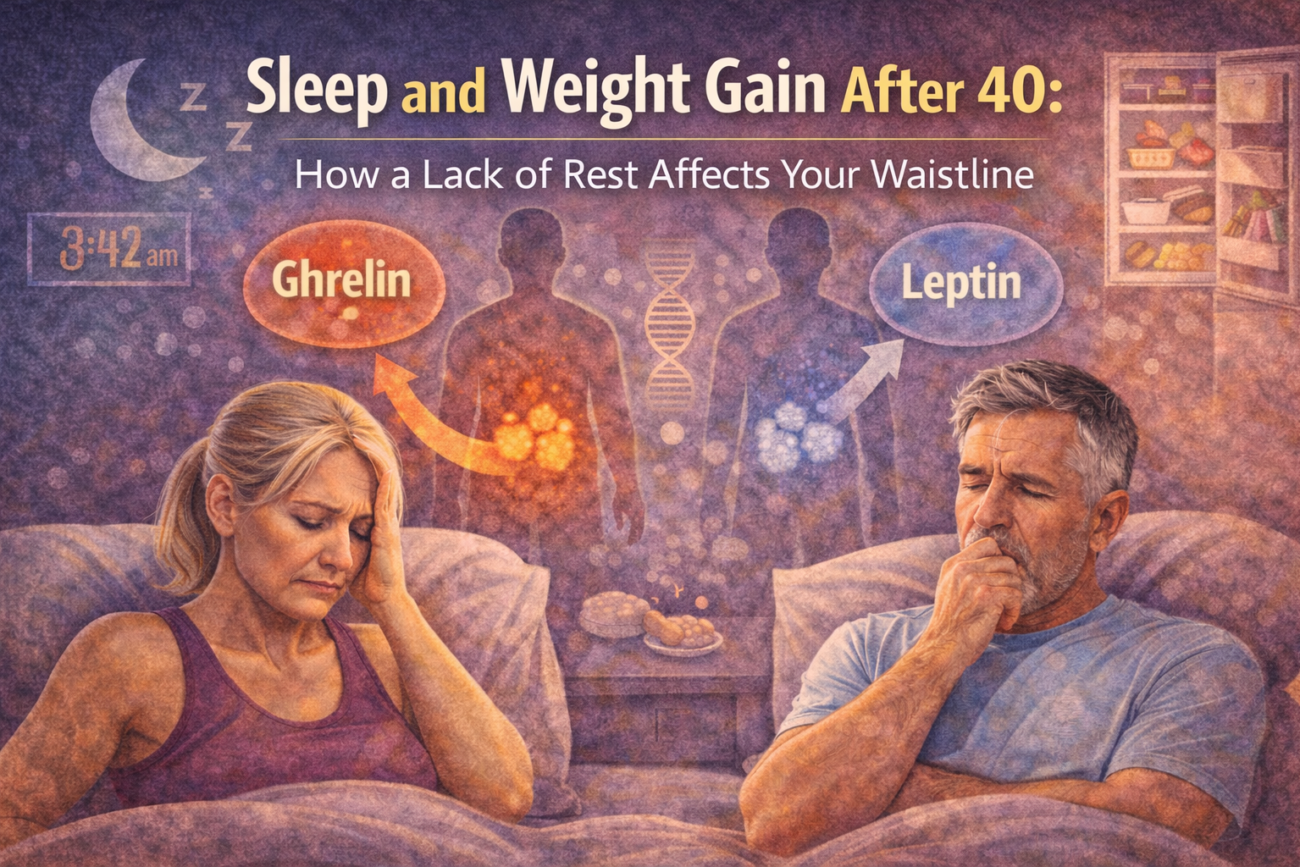
If you’ve ever noticed that poor sleep is followed by stronger cravings, lower motivation to exercise, and subtle weight gain, you’re not imagining it. The connection between sleep and weight gain is deeply rooted in hormonal regulation and metabolic function—especially after 40.
In midlife, sleep often becomes lighter, more fragmented, and less restorative. Stress, caregiving responsibilities, hormonal transitions, and work pressures all contribute. Over time, even mild chronic sleep deprivation can shift appetite hormones, blood sugar regulation, and fat storage patterns.
Understanding how sleep affects metabolism can help you address weight challenges at their root rather than focusing solely on diet or exercise.
Why Sleep Becomes More Disrupted After 40
As adults age, natural changes occur in sleep architecture:
Reduced deep sleep duration
Increased nighttime awakenings
Greater sensitivity to stress
Hormonal fluctuations affecting sleep cycles
These changes increase vulnerability to circadian rhythm disruption, where the internal body clock becomes misaligned with daily routines.
When sleep quality declines, the body’s metabolic regulation systems are among the first to feel the impact.
Sleep and Weight Gain — The Hormonal Mechanism
The link between sleep and weight gain involves appetite-regulating hormones, stress hormones, and insulin sensitivity.
Two key hormones are:
Ghrelin, which stimulates hunger
Leptin, which signals fullness
When sleep is restricted, a ghrelin and leptin imbalance often occurs:
Ghrelin levels increase.
Leptin levels decrease.
This hormonal shift promotes increased appetite—particularly for high-calorie, carbohydrate-rich foods.
Over time, repeated sleep restriction can contribute significantly to fat accumulation.
Sleep Debt and Cravings
Even modest sleep debt and cravings are closely linked. Research shows that individuals who sleep fewer than 6–7 hours per night are more likely to crave:
Sugary foods
Refined carbohydrates
High-fat snacks
This isn’t simply a matter of willpower. Sleep deprivation alters brain reward centers, making calorie-dense foods more appealing.
In midlife, when metabolic flexibility is already reduced, these cravings can contribute to gradual weight gain.
REM Sleep and Metabolism
Different sleep stages serve distinct physiological functions. REM sleep and metabolism are connected through brain activity and hormonal regulation.
During REM sleep:
The brain processes emotional stress.
Hormonal balance is supported.
Neural pathways regulating appetite are stabilized.
When REM sleep is shortened—common with aging or stress—metabolic regulation may become less efficient.
Chronic REM sleep disruption can amplify the connection between sleep and weight gain.
Circadian Rhythm Disruption and Fat Storage
Your circadian rhythm governs more than sleep timing. It also influences:
Insulin sensitivity
Cortisol release
Appetite hormone patterns
Digestive efficiency
When circadian rhythm disruption occurs—such as irregular sleep schedules or late-night screen use—metabolic timing becomes misaligned.
Eating late at night when insulin sensitivity is lower may encourage fat storage. Over time, this pattern reinforces gradual abdominal weight gain.
Late-Night Eating Patterns
Sleep deprivation often leads to late-night eating patterns. Fatigue reduces impulse control and increases reward-seeking behavior.
When individuals stay awake longer:
Opportunities to snack increase.
Hunger hormones remain elevated.
Metabolism slows in preparation for sleep.
This mismatch—eating during biological “rest mode”—can promote weight gain.
Breaking the cycle requires addressing sleep quality, not just food choices.
Melatonin and Metabolism
Melatonin is commonly associated with sleep onset, but melatonin and metabolism are closely connected.
Melatonin helps regulate:
Insulin secretion
Glucose tolerance
Circadian timing
When artificial light exposure at night suppresses melatonin, metabolic signaling may be disrupted.
Lower melatonin levels combined with late-night eating may impair blood sugar control, indirectly contributing to sleep and weight gain patterns.
Sleep Apnea and Body Fat
For some adults over 40, particularly men and postmenopausal women, sleep apnea and body fat are closely linked.
Excess body fat—especially around the neck and abdomen—can increase sleep apnea risk. In turn, sleep apnea:
Fragment sleep cycles
Elevate stress hormones
Worsen insulin resistance
Increase appetite dysregulation
This creates a self-reinforcing loop between poor sleep and metabolic dysfunction.
Identifying and treating sleep apnea can significantly improve metabolic health.
The Stress-Sleep-Metabolism Triangle
Sleep deprivation elevates cortisol, the body’s primary stress hormone. Increased cortisol can:
Raise blood sugar
Promote abdominal fat storage
Increase appetite
This interaction strengthens the link between sleep and weight gain.
When combined with a ghrelin and leptin imbalance, the result is increased hunger, reduced satiety, and higher likelihood of calorie-dense food intake.
In midlife, when hormonal shifts already affect metabolism, this stress-sleep cycle becomes even more influential.
How Sleep Fits Into the Bigger Picture
Sleep is one of several interconnected factors affecting midlife metabolism. Hormonal transitions, muscle loss, insulin sensitivity decline, and stress all overlap.
For a comprehensive overview of these interacting systems, explore Why Weight Loss Becomes Harder After 40: Causes and Solutions, which examines the full metabolic ecosystem.
Understanding this broader context helps avoid oversimplifying weight gain to a single behavior.
Practical Strategies to Improve Sleep and Support Metabolism
Improving sleep does not require perfection. Small, consistent changes can significantly impact metabolic health.
1. Maintain a Consistent Sleep Schedule
Going to bed and waking up at the same time each day stabilizes circadian rhythms. This supports balanced cortisol and melatonin cycles.
Consistency reduces circadian rhythm disruption and improves appetite regulation.
2. Limit Evening Light Exposure
Blue light suppresses melatonin production. Reducing screen time 60–90 minutes before bed can enhance melatonin and metabolism alignment.
Dim lighting signals to the body that it’s time to transition into restorative processes.
3. Create a Wind-Down Routine
Relaxation practices such as reading, stretching, or breathing exercises help lower stress hormones before bed.
This reduces the sleep stress connection that often contributes to sleep debt and cravings.
4. Prioritize Daytime Movement
Regular physical activity improves sleep depth and supports metabolic regulation. However, intense exercise too close to bedtime may elevate cortisol temporarily.
Balanced movement earlier in the day promotes REM sleep and metabolism stability.
5. Manage Late-Night Eating
Establishing a consistent eating window and avoiding heavy meals close to bedtime helps regulate blood sugar and insulin responses.
Reducing late-night eating patterns can meaningfully influence sleep and weight gain outcomes.
6. Seek Evaluation for Persistent Sleep Issues
If loud snoring, gasping during sleep, or chronic fatigue occur, screening for sleep apnea may be appropriate.
Addressing sleep apnea and body fat interactions can significantly improve overall metabolic function.
Reframing Sleep as a Metabolic Tool
For many adults over 40, sleep is viewed as optional—something to sacrifice when life becomes busy. But biologically, sleep is foundational.
The relationship between sleep and weight gain reflects the body’s integrated hormonal system. Appetite hormones, insulin sensitivity, stress responses, and circadian rhythms all depend on adequate rest.
Improving sleep is not a luxury; it is a strategic metabolic intervention.
Conclusion: Sleep and Weight Gain in Midlife
The connection between sleep and weight gain is driven by hormonal shifts such as ghrelin and leptin imbalance, sleep debt and cravings, circadian rhythm disruption, and impaired REM sleep and metabolism regulation.
Chronic sleep deprivation increases appetite, reduces insulin sensitivity, and promotes fat storage—particularly in midlife adults.
Yet sleep is a modifiable factor. By improving consistency, reducing late-night light exposure, managing stress, and addressing sleep disorders, adults over 40 can support both hormonal balance and body composition.
For a broader exploration of how sleep interacts with hormones, stress, and metabolism, revisit Why Weight Loss Becomes Harder After 40: Causes and Solutions. Sustainable weight management begins not only in the kitchen or gym—but also in the bedroom.
