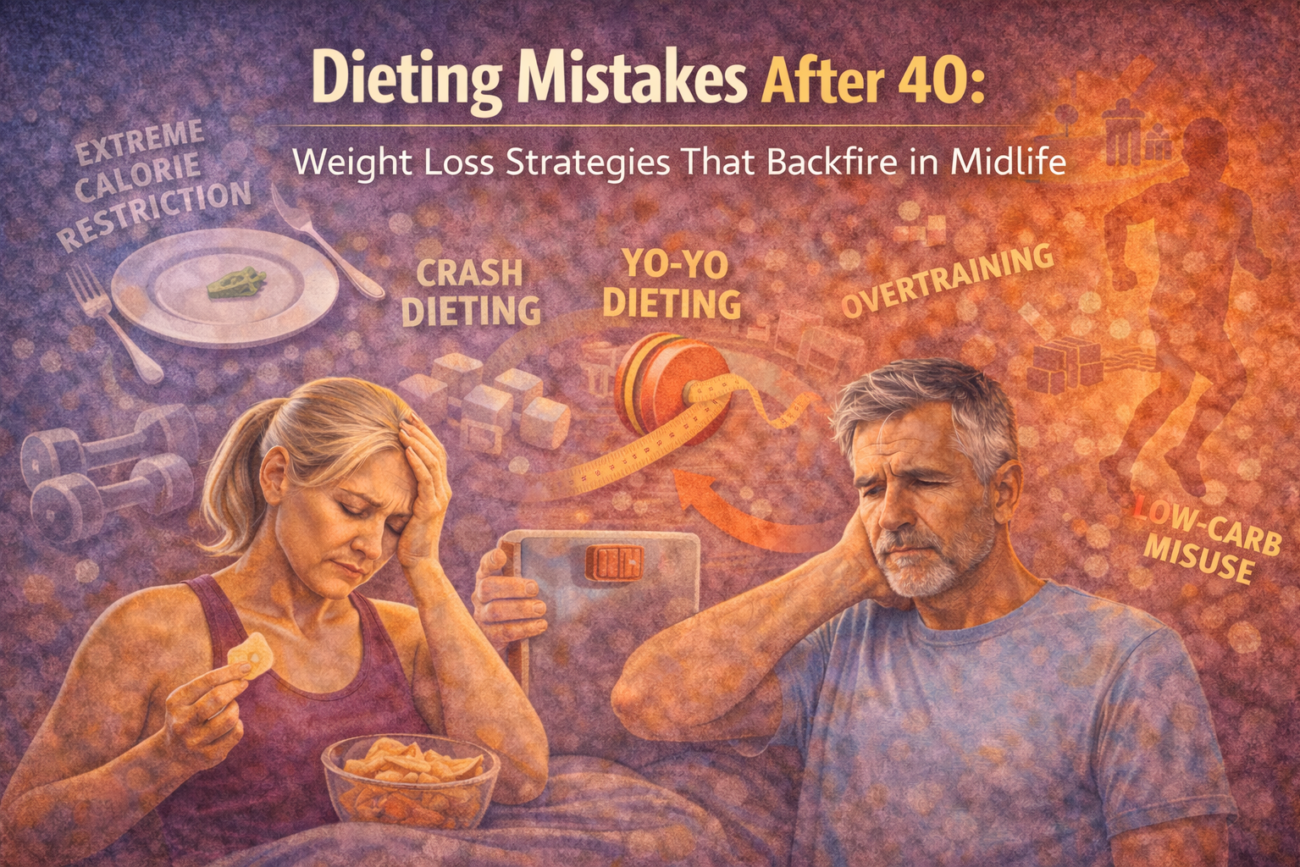
If you’re over 40 and feel like the harder you diet, the less progress you make, you’re not alone. Many adults double down on restriction when weight loss slows—cutting calories more aggressively, eliminating entire food groups, or increasing exercise intensity. Ironically, these efforts often make things worse.
Understanding the most common dieting mistakes after 40 can help you avoid strategies that undermine metabolism, muscle mass, and hormonal balance. Midlife requires smarter—not harsher—approaches.
Weight regulation after 40 is influenced by muscle changes, insulin sensitivity shifts, stress, and sleep patterns. When dieting strategies ignore these factors, they often backfire.
Why Dieting Feels Different After 40
In younger years, calorie restriction often produces faster, more visible results. After 40:
Muscle mass gradually declines.
Recovery slows.
Hormonal patterns shift.
Stress loads increase.
These changes make the body more sensitive to aggressive dieting tactics.
Instead of accelerating fat loss, extreme strategies can trigger protective mechanisms such as metabolic adaptation to dieting, where the body reduces energy expenditure in response to restriction.
Recognizing these biological responses is key to avoiding common dieting mistakes after 40.
Dieting Mistakes After 40 That Slow Metabolism
Let’s examine the most frequent patterns that undermine midlife weight loss efforts.
1. Extreme Calorie Restriction
One of the most damaging dieting mistakes after 40 is extreme calorie restriction.
Severely reducing calories can:
Lower resting metabolic rate
Increase stress hormones
Promote muscle loss
Intensify hunger signals
While rapid scale changes may occur initially, long-term fat loss often stalls.
The body perceives extreme restriction as a stressor. In response, it conserves energy—a classic example of metabolic adaptation to dieting.
Moderate, sustainable calorie deficits are far more effective over time.
2. Crash Dieting Risks
Closely related to extreme restriction are crash dieting risks. Short-term, highly restrictive plans may promise quick results, but they often lead to:
Muscle loss
Nutrient deficiencies
Hormonal disruption
Increased rebound weight gain
Repeated cycles of severe dieting increase the likelihood of yo-yo dieting effects, where weight fluctuates up and down.
Over time, this cycle can impair metabolic efficiency and make future fat loss more challenging.
3. Unrealistic Calorie Deficits
Many adults calculate aggressive calorie deficits without accounting for midlife metabolic changes. Unrealistic calorie deficits create unsustainable expectations.
Large deficits:
Increase fatigue
Elevate cortisol
Reduce workout performance
Encourage overeating episodes
The goal is not maximal restriction, but steady progress that preserves muscle and metabolic health.
Smaller, consistent deficits are more aligned with how the body responds after 40.
4. Under-Eating Protein
Another overlooked issue is under-eating protein. Protein supports muscle maintenance and satiety—both critical in midlife.
When protein intake is inadequate:
Muscle loss accelerates
Metabolic rate declines
Hunger increases
Recovery slows
Since muscle mass influences resting calorie burn, insufficient protein can contribute to slower fat loss.
Among dieting mistakes after 40, neglecting protein intake can have long-term consequences.
5. Low-Carb Misuse
Low-carbohydrate diets can be helpful for some individuals, but low-carb misuse is common.
Problems arise when:
Carbohydrates are eliminated entirely without balancing protein and fiber.
Calorie intake becomes too low.
Energy for workouts declines.
Carbohydrates play a role in thyroid function and exercise performance. Removing them indiscriminately may increase stress hormones and reduce metabolic efficiency.
Balanced macronutrient strategies often outperform extreme elimination.
6. Overtraining Stress Response
When fat loss slows, some individuals increase workout intensity dramatically. However, the overtraining stress response can elevate cortisol and impair recovery.
Signs of overtraining include:
Persistent fatigue
Sleep disturbances
Reduced performance
Increased cravings
Chronic high-intensity exercise combined with calorie restriction amplifies stress signals.
In midlife, recovery capacity is not the same as it was at 25. Sustainable training supports metabolism; excessive training undermines it.
7. Ignoring Metabolic Adaptation to Dieting
Metabolic adaptation to dieting refers to the body’s ability to reduce energy expenditure during prolonged calorie restriction.
This includes:
Lower resting metabolic rate
Reduced spontaneous movement
Decreased thyroid hormone activity
Repeated aggressive dieting strengthens this adaptive response.
Rather than fighting the body with harsher restriction, strategic maintenance phases and resistance training can help preserve metabolic rate.
8. Yo-Yo Dieting Effects Over Time
Few patterns are as damaging as repeated weight cycling. The long-term yo-yo dieting effects may include:
Reduced muscle mass
Increased fat percentage
Altered hunger hormones
Psychological fatigue
Weight cycling often results from crash dieting followed by rebound overeating.
Breaking this cycle requires abandoning short-term thinking in favor of consistent habits.
The Psychological Component of Dieting Mistakes After 40
Midlife dieting often carries emotional weight. Adults over 40 may compare their current bodies to earlier decades, leading to:
Unrealistic expectations
Frustration
All-or-nothing thinking
This mindset fuels many dieting mistakes after 40.
Instead of viewing weight management as punishment, reframing it as metabolic support encourages sustainable choices.
For a broader understanding of how hormones, metabolism, stress, and lifestyle intersect in midlife, revisit Why Weight Loss Becomes Harder After 40: Causes and Solutions. Dieting errors rarely occur in isolation—they interact with larger biological systems.
Practical, Sustainable Strategies for Midlife Fat Loss
Avoiding mistakes is only part of the equation. Here’s what works better.
1. Aim for Moderate Calorie Deficits
A 10–20% calorie reduction is generally more sustainable than aggressive restriction. This minimizes metabolic adaptation while encouraging steady fat loss.
2. Prioritize Resistance Training
Strength training preserves muscle mass and supports metabolic rate.
Two to three sessions per week can:
Improve insulin sensitivity
Maintain lean mass
Enhance body composition
Preserving muscle counters many dieting mistakes after 40.
3. Increase Protein Intake
Protein supports satiety and muscle maintenance. Distributing protein evenly across meals improves muscle protein synthesis.
Avoiding under-eating protein helps stabilize metabolism.
4. Schedule Maintenance Phases
Periodic breaks from calorie deficits can reduce metabolic adaptation to dieting and improve adherence.
Maintenance phases allow the body to recalibrate without abandoning progress.
5. Balance Intensity With Recovery
Exercise should challenge but not overwhelm. Incorporate:
Strength training
Moderate cardio
Rest days
Avoid triggering the overtraining stress response by listening to recovery signals.
6. Set Realistic Expectations
Weight loss after 40 is often slower than in younger years. Accepting this reality reduces frustration and extreme dieting behaviors.
Progress measured in inches, strength gains, and energy improvements is just as meaningful as scale changes.
Reframing Midlife Weight Loss
Experiencing setbacks can feel discouraging. However, many adults over 40 are not failing—they are simply using outdated strategies.
The body becomes more adaptive and protective with age. Harsh restriction signals stress, not success.
Understanding common dieting mistakes after 40 allows you to align with your physiology rather than fight it.
Conclusion: Avoiding Dieting Mistakes After 40
The most common dieting mistakes after 40 include extreme calorie restriction, crash dieting risks, unrealistic calorie deficits, under-eating protein, low-carb misuse, overtraining stress response, and repeated yo-yo dieting effects.
These strategies often trigger metabolic adaptation to dieting and undermine long-term success.
Midlife weight management requires balance—adequate protein, resistance training, moderate calorie reduction, recovery, and realistic expectations.
For a comprehensive overview of the hormonal and metabolic shifts influencing midlife fat loss, revisit Why Weight Loss Becomes Harder After 40: Causes and Solutions. Sustainable progress begins with understanding your body’s changing physiology—and working with it, not against it.
