Many adults over 40 notice subtle but meaningful changes in their bodies. Strength gains take longer. Muscle definition softens. Recovery from workouts slows. At the same time, fat seems easier to gain and harder to lose.
One often overlooked factor behind these shifts is protein intake. Understanding protein needs after 40 is essential for preserving muscle mass, maintaining metabolic health, and supporting long-term body composition.
Protein is not just about building muscle in youth. In midlife and beyond, it becomes a critical tool for protecting metabolic resilience.
Why Muscle Preservation Matters More After 40
After 30, adults begin to lose muscle mass gradually—a process that accelerates in the 40s and 50s. This age-related muscle loss contributes to:
Reduced resting metabolic rate
Lower strength and mobility
Increased fat percentage
Reduced insulin sensitivity
Because muscle tissue burns more calories at rest than fat tissue, preserving lean mass directly influences metabolism.
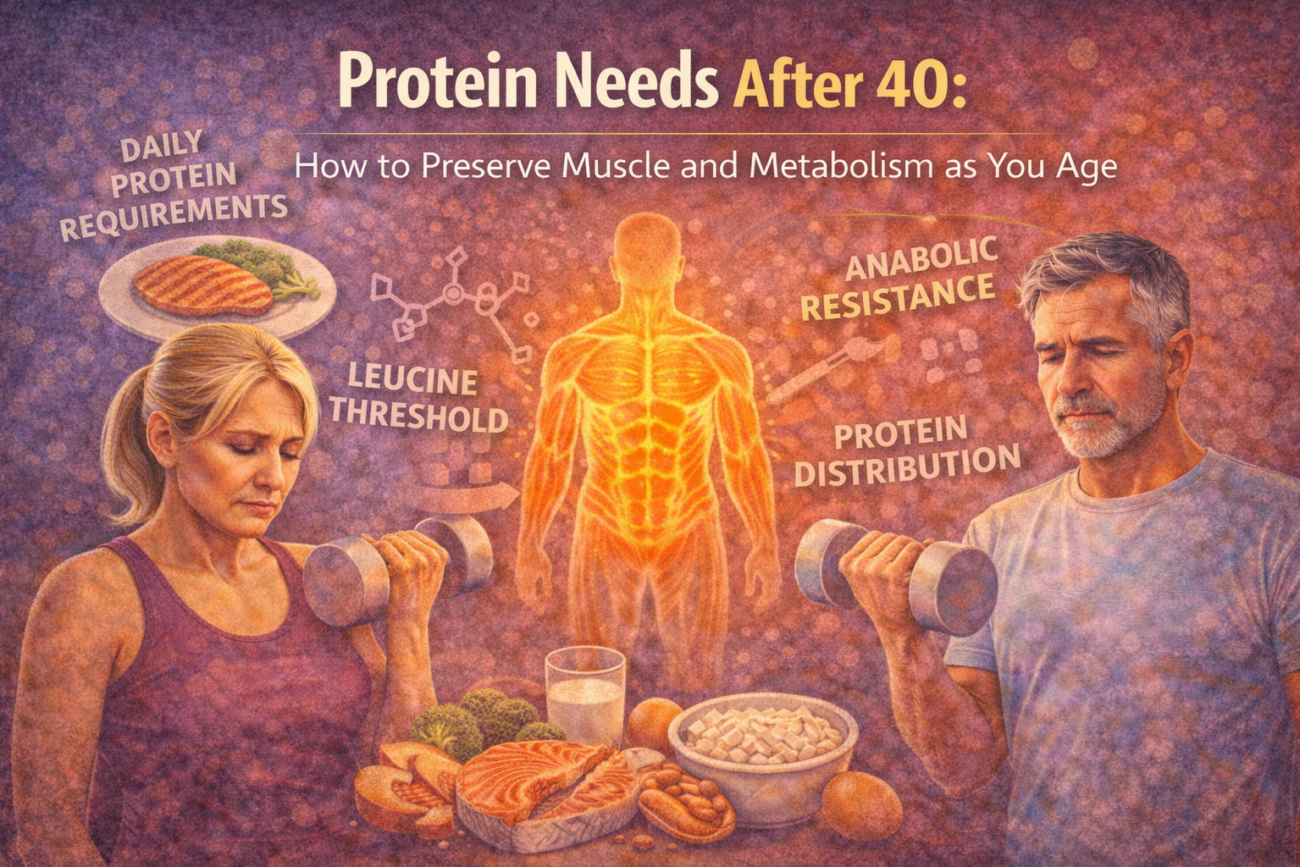
That’s why protein needs after 40 differ from earlier decades. The body becomes less efficient at building and maintaining muscle, a process known as anabolic resistance.
Protein Needs After 40 and Anabolic Resistance
Anabolic resistance refers to the reduced responsiveness of muscle tissue to protein intake and exercise stimulus.
With aging:
Muscle protein synthesis becomes less responsive.
Larger protein doses may be required to stimulate growth.
Recovery processes slow.
This shift underscores the importance of anabolic resistance nutrition—a strategy focused on adequate protein quantity and quality to overcome reduced muscle sensitivity.
Failing to adjust protein intake can accelerate muscle protein synthesis decline.
Daily Protein Requirements and Aging
The Recommended Dietary Allowance (RDA) for protein is often cited as 0.8 grams per kilogram of body weight per day. However, emerging research suggests that daily protein requirements aging may be higher for adults over 40.
Many experts recommend:
1.0–1.2 grams per kilogram per day for healthy aging adults
Higher ranges for those engaging in regular strength training
These levels better support muscle maintenance and metabolic health.
Meeting appropriate protein needs after 40 helps counteract muscle loss and preserve strength.
Muscle Protein Synthesis Decline
Muscle protein synthesis decline is a natural part of aging. Even when consuming adequate calories, the body becomes less efficient at converting dietary protein into muscle tissue.
Without sufficient protein:
Lean mass decreases.
Fat mass proportion increases.
Functional capacity declines.
This shift partly explains why weight loss becomes more challenging with age. Losing muscle reduces calorie expenditure, making fat loss slower.
Within the broader discussion of Why Weight Loss Becomes Harder After 40: Causes and Solutions, muscle preservation is a central pillar.
The Leucine Threshold and Muscle Activation
Not all protein is equal in stimulating muscle growth. Leucine, an essential amino acid, plays a key role in activating muscle protein synthesis.
The concept of a leucine threshold refers to the minimum amount of leucine needed in a meal to effectively stimulate muscle building pathways.
For adults over 40:
Larger protein portions may be required to reach this threshold.
Protein quality becomes more important.
High-quality protein sources—such as eggs, dairy, poultry, fish, legumes, and soy—contain sufficient leucine to support muscle maintenance.
Protein Distribution Across Meals
Many adults consume most of their protein at dinner while under-consuming it at breakfast and lunch.
Research suggests that protein distribution across meals influences muscle maintenance. Spreading protein intake evenly throughout the day:
Enhances muscle protein synthesis
Improves satiety
Stabilizes energy levels
For example, aiming for 25–35 grams of protein per meal may be more effective than consuming minimal protein early and large amounts at night.
This approach supports consistent anabolic signaling.
Protein Timing Strategies
While total daily intake is most important, thoughtful protein timing strategies can enhance results.
Post-exercise protein intake:
Supports muscle repair
Enhances recovery
Reduces soreness
However, precise timing is less critical than consistency.
Regular protein intake aligned with resistance training sessions maximizes muscle preservation and metabolic stability.
Satiety and Protein Intake
Protein plays a powerful role in appetite regulation. The connection between satiety and protein intake becomes especially important after 40.
Higher protein meals:
Increase fullness
Reduce overall calorie intake
Stabilize blood sugar
Lower cravings
By supporting satiety, adequate protein intake can indirectly aid fat loss while preserving muscle mass.
This dual benefit makes protein a cornerstone of midlife nutrition.
High-Quality Protein Sources
Choosing high-quality protein sources ensures adequate essential amino acids and leucine content.
Examples include:
Eggs
Greek yogurt
Cottage cheese
Fish and poultry
Lean red meat
Tofu and tempeh
Legumes combined with whole grains
Whole-food protein sources also provide micronutrients that support overall metabolic health.
Variety ensures nutritional completeness and sustainability.
Protein and Weight Management After 40
As metabolism adapts with age, maintaining lean mass becomes critical for long-term weight stability.
Higher protein intake:
Preserves muscle during calorie deficits
Minimizes metabolic slowdown
Supports strength training adaptations
Within the context of Why Weight Loss Becomes Harder After 40: Causes and Solutions, adequate protein intake addresses one of the most modifiable contributors to midlife metabolic decline.
Protein does not need to be excessive—but it does need to be sufficient.
Practical Strategies to Meet Protein Needs After 40
Meeting protein needs does not require complex meal plans. Simple adjustments can make a significant difference.
1. Include Protein at Every Meal
Aim to incorporate a high-quality protein source at breakfast, lunch, and dinner.
For example:
Eggs or Greek yogurt at breakfast
Lean protein with salad or whole grains at lunch
Fish, poultry, or legumes at dinner
Consistent intake supports protein distribution across meals.
2. Pair Protein With Resistance Training
Strength training stimulates muscle protein synthesis. Combining exercise with adequate protein intake enhances results.
Two to three weekly resistance sessions can significantly slow muscle protein synthesis decline.
3. Monitor Portion Sizes
Many adults underestimate their protein intake.
As a general guide:
A palm-sized portion of meat or fish provides roughly 20–30 grams of protein.
A cup of Greek yogurt provides around 15–20 grams.
Tracking intake temporarily can increase awareness.
4. Prioritize Recovery
Sleep, hydration, and stress management support muscle repair and hormonal balance.
Protein alone cannot preserve muscle without adequate recovery.
5. Avoid Severe Calorie Restriction
Extreme calorie deficits can accelerate muscle loss—even with adequate protein.
Moderate calorie reductions combined with sufficient protein protect lean mass.
Reframing Protein as a Midlife Strategy
For many adults, protein is associated with bodybuilding or athletic performance. In reality, protein becomes more important with age—not less.
Meeting appropriate protein needs after 40 is not about extreme diets. It is about maintaining strength, independence, metabolic health, and long-term quality of life.
Small daily habits—consistent intake, balanced meals, resistance training—have cumulative effects over years.
Conclusion: Understanding Protein Needs After 40
Protein needs after 40 increase due to anabolic resistance, muscle protein synthesis decline, and changing metabolic demands. Adequate daily protein requirements aging support muscle preservation, improve satiety, and help maintain metabolic health.
By focusing on high-quality protein sources, even protein distribution across meals, thoughtful protein timing strategies, and resistance training, adults over 40 can meaningfully influence body composition and strength.
For a broader understanding of how muscle, hormones, metabolism, and lifestyle interact in midlife, revisit Why Weight Loss Becomes Harder After 40: Causes and Solutions. Protecting muscle is not just about aesthetics—it’s a foundational component of sustainable health after 40.
