If you’ve tried extreme diets, cutting entire food groups, or starving yourself only to regain the weight later — you’re not alone.
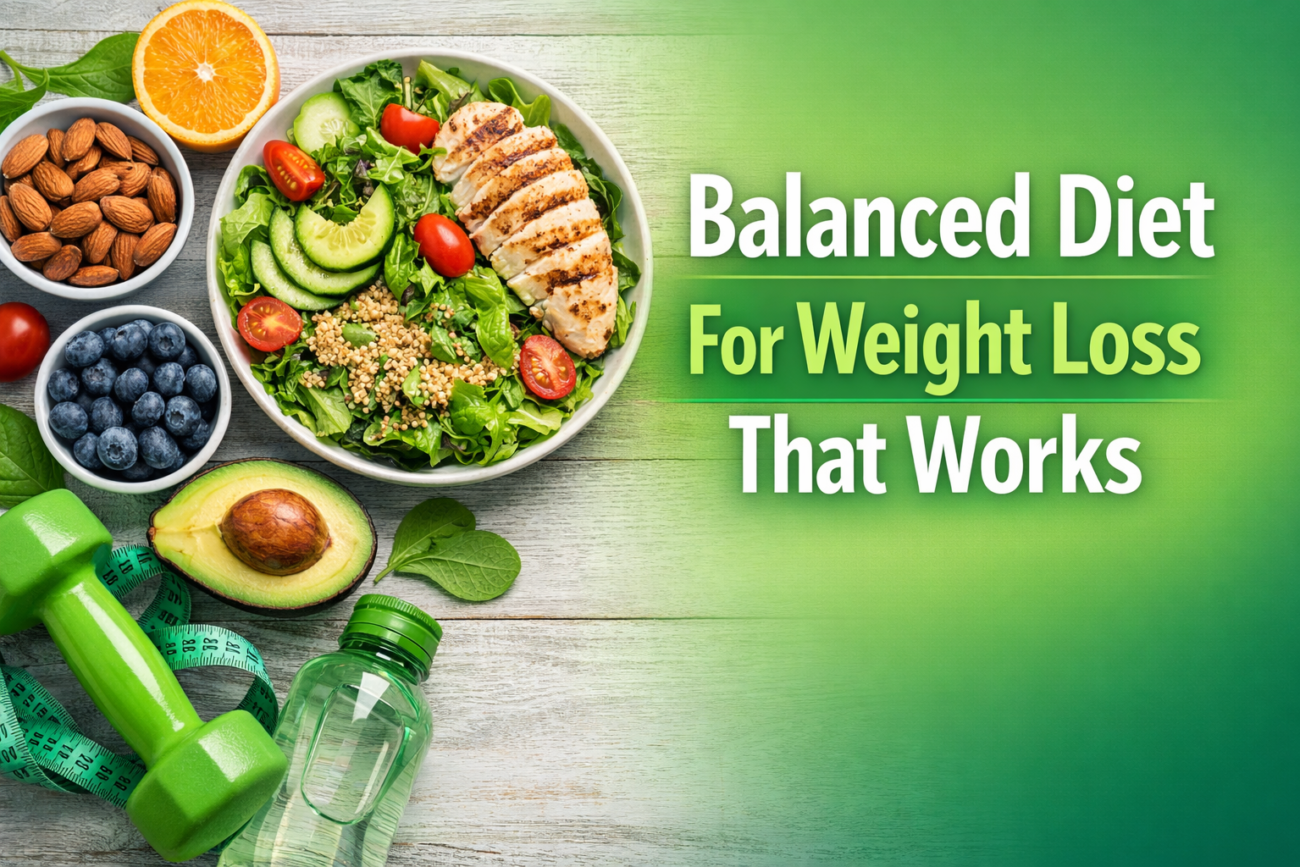
The truth is simple: a balanced diet for weight loss works better than restrictive dieting. It helps you lose fat, preserve muscle, maintain energy, and sustain results long term.
In this guide, you’ll learn exactly how to structure balanced meals, how many calories to eat, what macro ratio works best, and how to avoid the most common mistakes people make when trying to lose weight.
What Is a Balanced Diet for Weight Loss?
A balanced diet for weight loss includes the right proportions of:
Protein
Complex carbohydrates
Healthy fats
Fiber-rich vegetables
Adequate hydration
All while maintaining a moderate calorie deficit.
Instead of eliminating carbs or fats completely, balance focuses on giving your body what it needs — just in slightly lower energy amounts so fat loss occurs.
Simple definition:
A balanced diet for fat loss provides enough nutrients to support metabolism and muscle while reducing overall calorie intake gradually.
Why Most Diets Fail
Crash diets usually fail because they:
Cut calories too aggressively
Eliminate entire food groups
Ignore protein needs
Slow down metabolism
Cause muscle loss
When muscle decreases, metabolism drops — and weight regain becomes easier.
A balanced diet avoids this trap by protecting lean muscle mass while encouraging fat burning.
The Ideal Macro Breakdown for Weight Loss
While exact ratios vary per person, a practical starting point is:
Protein: 30–35%
Carbohydrates: 35–40%
Fats: 25–30%
This ratio supports:
Muscle preservation
Stable energy
Reduced cravings
Improved satiety
Let’s break down each component.
1️⃣ Protein: The Fat Loss Foundation
Protein is the most important nutrient in any balanced diet plan for weight loss.
Benefits include:
Higher satiety
Muscle preservation
Increased calorie burn (thermic effect)
Reduced hunger hormones
Best Protein Sources:
Eggs
Greek yogurt
Chicken breast
Fish
Lentils
Tofu
Cottage cheese
Aim for 0.7–1 gram per pound of body weight daily.
2️⃣ Carbohydrates: Not the Enemy
Carbs often get blamed for weight gain, but the real issue is excess calories.
Choose complex carbs such as:
Oats
Brown rice
Sweet potatoes
Quinoa
Whole wheat bread
Fruits
Complex carbs provide fiber, which improves digestion and keeps you full longer.
Avoid:
Sugary drinks
Refined pastries
Highly processed snacks
3️⃣ Healthy Fats: Essential for Hormones
Healthy fats support:
Hormone balance
Brain health
Fat-soluble vitamin absorption
Good sources include:
Avocados
Nuts
Seeds
Olive oil
Fatty fish
Portion control matters because fats are calorie-dense.
How Many Calories Should You Eat?
Weight loss happens in a calorie deficit.
Step 1: Calculate maintenance calories.
Step 2: Reduce by 300–500 calories daily.
This typically leads to:
1–2 pounds of fat loss per week
Slow, steady fat loss is sustainable.
Sample Balanced Diet Meal Plan for Weight Loss
Here’s a practical example.
Breakfast
2 eggs
1 slice whole grain toast
½ avocado
Black coffee or green tea
Mid-Morning Snack
Greek yogurt with berries
Lunch
Grilled chicken
Brown rice
Steamed broccoli
Olive oil drizzle
Afternoon Snack
Handful of almonds
Dinner
Salmon
Roasted vegetables
Quinoa
Hydration
2–3 liters of water daily
This structure balances macros while controlling calories.
7-Day Balanced Diet Framework
Instead of rigid dieting, rotate:
Lean proteins
Whole grains
Seasonal vegetables
Healthy fats
This prevents boredom and improves nutrient diversity.
Common Mistakes to Avoid
1. Cutting Carbs Completely
Leads to fatigue and rebound cravings.
2. Ignoring Protein
Reduces muscle retention and slows metabolism.
3. Skipping Meals
Often leads to overeating later.
4. Underestimating Portions
Even healthy foods can stall progress if portions are too large.
5. Expecting Overnight Results
Healthy transformation takes time.
Balanced Diet vs Extreme Dieting
| Balanced Diet | Crash Diet |
|---|---|
| Sustainable | Short-term |
| Preserves muscle | Muscle loss |
| Stable energy | Fatigue |
| Long-term fat loss | Rebound weight gain |
Consistency always beats intensity.
Does Exercise Matter?
Yes — but nutrition drives most weight loss results.
For best outcomes:
Strength train 3–4 times weekly
Walk 8,000–10,000 steps daily
Sleep 7–8 hours
Exercise protects muscle while your balanced diet reduces fat.
Can Supplements Help?
A balanced diet should always come first.
However, some individuals explore metabolism-support supplements once their nutrition is optimized.
If you’re considering that route, it’s wise to research thoroughly. Reading a detailed CitrusBurn review that examines ingredients, user feedback, and realistic expectations can help you understand whether such a product aligns with your goals.
Remember, supplements should support — not replace —:
Calorie control
Whole food nutrition
Protein intake
Strength training
No product works without foundational habits.
How Long Before You See Results?
With a proper balanced diet for weight loss:
Week 1–2: Reduced bloating
Week 3–4: Noticeable fat loss
Month 2–3: Visible body composition changes
Month 4+: Significant transformation
Consistency determines outcome.
Frequently Asked Questions
What is the best balanced diet for weight loss?
A diet including protein, complex carbs, healthy fats, and vegetables in a moderate calorie deficit.
Can you lose weight without cutting carbs?
Yes. Portion control and calorie balance matter more than carb elimination.
Is a balanced diet better than keto?
For long-term sustainability, many people find balanced diets easier to maintain.
How much protein should I eat?
About 0.7–1 gram per pound of body weight.
Final Thoughts
A balanced diet for weight loss works because it respects your body.
It doesn’t starve you.
It doesn’t eliminate entire food groups.
It doesn’t rely on extremes.
Instead, it focuses on:
Smart calorie control
Adequate protein
Whole foods
Consistency
The goal isn’t fast weight loss — it’s lasting fat loss.
If you commit to balanced eating, strength training, and patience, the results will follow.
Sustainable transformation always beats temporary restriction.
