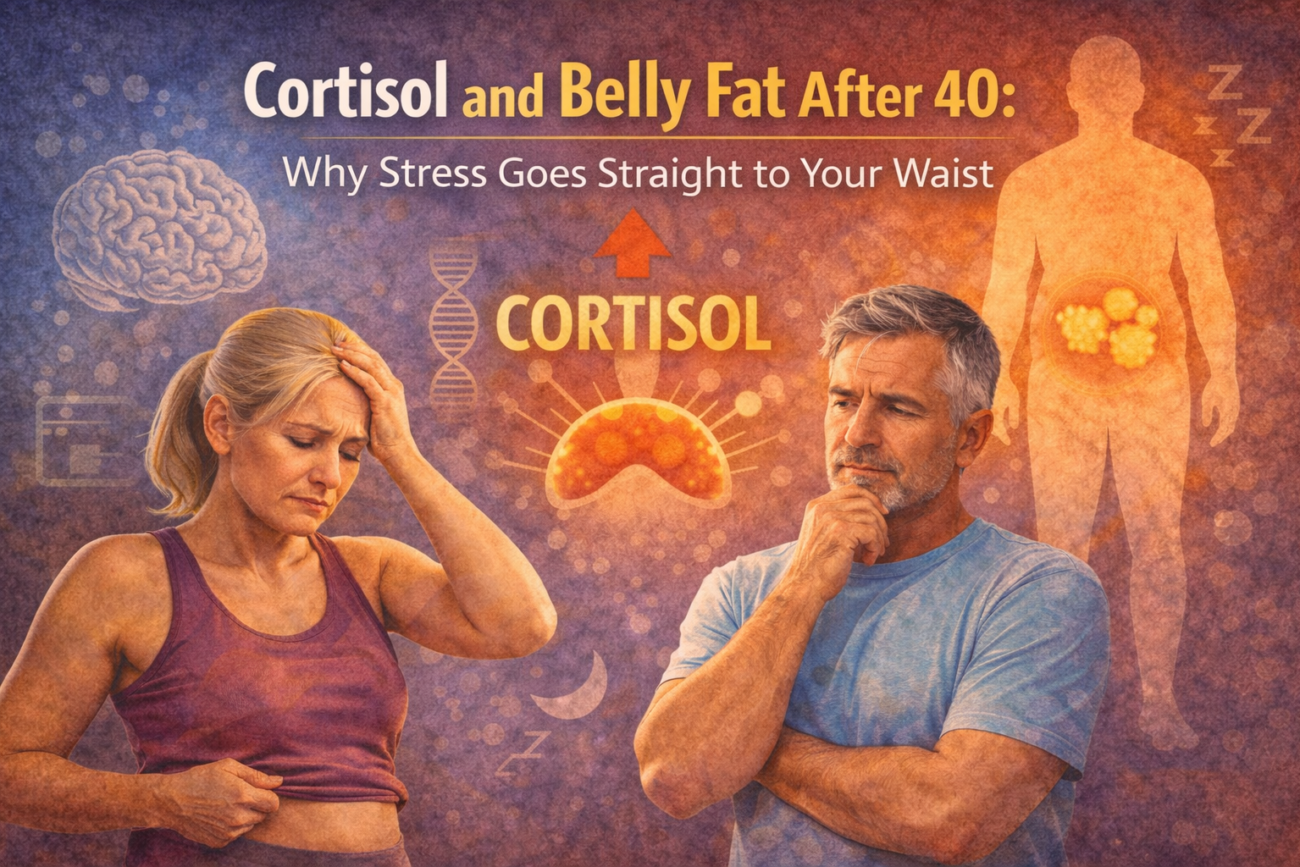
If you’ve noticed that stress seems to go straight to your midsection after 40, you’re not alone. Many adults describe a frustrating pattern: during busy seasons, emotionally intense periods, or chronic work pressure, abdominal fat increases—even when diet and exercise habits haven’t changed dramatically.
This phenomenon is often linked to cortisol and belly fat, a relationship rooted in the body’s stress response system. Cortisol, commonly called the “stress hormone,” plays a necessary and protective role in human physiology. But when its regulation becomes disrupted, especially in midlife, it can influence fat distribution in noticeable ways.
Understanding how stress biology interacts with metabolism can help you respond strategically rather than blaming willpower.
What Is Cortisol and Why Does It Matter?
Cortisol is produced by the adrenal glands and regulated by a communication network called the hypothalamic-pituitary-adrenal (HPA) axis. This system governs the adrenal stress response, helping your body respond to physical or emotional threats.
In short bursts, cortisol:
Increases alertness
Mobilizes energy
Raises blood sugar temporarily
Supports survival mechanisms
However, chronic exposure to elevated cortisol levels can shift metabolic patterns. This is where the connection between cortisol and belly fat becomes relevant.
Cortisol and Belly Fat — The Biological Link
The relationship between cortisol and belly fat is not accidental. Abdominal fat tissue contains a high density of cortisol receptors. When cortisol levels remain elevated for extended periods:
Fat storage signals increase.
Fat breakdown is reduced.
Appetite may rise.
Blood sugar levels fluctuate.
This pattern can encourage stress-induced fat storage, particularly in the abdominal region.
Visceral fat—the fat surrounding internal organs—is especially sensitive to stress hormones. Over time, chronic stress can contribute to increased visceral fat and stress interactions, reinforcing the cycle of metabolic disruption.
Chronic Stress Hormones and Midlife Changes
As adults move into their 40s and 50s, life stressors often intensify. Career responsibilities peak. Caregiving demands increase. Sleep may become fragmented.
Persistent activation of chronic stress hormones can alter metabolic balance. The body is designed to handle short-term stress, but it is less adapted to constant psychological strain.
In midlife, hormonal resilience may decrease. This means that the metabolic consequences of stress can become more pronounced than they were in earlier decades.
HPA Axis Dysfunction and Metabolic Consequences
The HPA axis coordinates cortisol release in a daily rhythm. Ideally, cortisol is highest in the morning—helping you wake up—and gradually declines throughout the day.
With prolonged stress, HPA axis dysfunction can occur. This may lead to:
Flattened cortisol rhythms
Excess evening cortisol
Inconsistent morning energy
Increased appetite
Disruption of this natural rhythm—often described as cortisol rhythm disruption—can impair sleep quality and glucose regulation.
When cortisol remains elevated at night, the body may be more prone to storing fat rather than repairing tissue.
The Sleep Stress Connection
The sleep stress connection is one of the most powerful and overlooked contributors to abdominal fat accumulation.
Poor sleep:
Elevates cortisol
Increases hunger hormones
Reduces insulin sensitivity
Lowers impulse control
Chronic sleep deprivation amplifies the effects of cortisol imbalance symptoms. Even mild sleep restriction over weeks or months can contribute to noticeable changes in body composition.
This interaction helps explain why individuals experiencing insomnia or high stress often struggle with cortisol and belly fat simultaneously.
Emotional Stress and Weight Gain
Not all stress is physical. Emotional strain—from relationships, work pressure, or life transitions—can activate the same biological pathways.
Emotional stress weight gain occurs through several mechanisms:
Increased cravings for high-calorie foods
Reduced motivation for exercise
Elevated cortisol levels
Impaired sleep
While emotional eating often receives attention, the hormonal effects of stress can influence fat storage even without dramatic changes in diet.
This underscores the importance of addressing psychological stress as part of metabolic health.
Cortisol Imbalance Symptoms to Recognize
Cortisol imbalance symptoms may vary but can include:
Persistent fatigue
Abdominal weight gain
Sleep disturbances
Increased anxiety
Difficulty losing fat despite effort
It’s important to note that cortisol is rarely the sole cause of weight gain. Instead, it interacts with insulin regulation, muscle mass changes, and lifestyle factors.
For a comprehensive understanding of these overlapping influences, explore Why Weight Loss Becomes Harder After 40: Causes and Solutions, which examines the broader metabolic landscape affecting midlife adults.
Stress-Induced Fat Storage and Insulin Interaction
Cortisol influences glucose metabolism. During stress, cortisol raises blood sugar levels to provide immediate energy.
If stress becomes chronic:
Blood sugar remains elevated more frequently.
Insulin levels may increase.
Fat storage signals intensify.
This overlap between cortisol and insulin explains why stress-induced fat storage often centers in the abdomen.
The combination of elevated cortisol and insulin can be particularly potent in encouraging visceral fat accumulation.
Why Abdominal Fat Is So Responsive to Stress
Abdominal fat tissue is hormonally active. It responds quickly to metabolic signals and stress hormones.
When cortisol binds to receptors in abdominal fat cells:
Lipid storage increases.
Inflammatory signals may rise.
Fat cell size expands.
This is why the link between cortisol and belly fat tends to manifest most visibly around the waistline rather than evenly across the body.
Understanding this biological predisposition can reduce self-blame and redirect focus toward stress management strategies.
Practical Strategies to Regulate Cortisol
While stress cannot be eliminated entirely, its metabolic impact can be moderated.
1. Prioritize Consistent Sleep
Improving sleep quality directly supports cortisol rhythm regulation.
Strategies include:
Maintaining consistent bedtimes
Limiting late-night screen exposure
Creating a cool, dark sleep environment
Better sleep strengthens the sleep stress connection in your favor, reducing abdominal fat accumulation risk.
2. Incorporate Moderate Physical Activity
Exercise helps regulate stress hormones. However, excessive high-intensity training can increase cortisol temporarily.
Balanced routines—including strength training and moderate cardio—support metabolic health without overstimulating the stress response.
Regular movement also improves insulin sensitivity, counteracting stress-induced fat storage.
3. Practice Stress Reduction Techniques
Evidence-based methods to regulate chronic stress hormones include:
Mindfulness meditation
Deep breathing exercises
Yoga or stretching
Time in nature
Social connection
These practices reduce HPA axis dysfunction over time and support more stable cortisol rhythms.
4. Avoid Extreme Dieting
Severe calorie restriction can elevate cortisol levels. During periods of under-eating, the body perceives stress and may increase fat storage signals.
Moderate, sustainable dietary strategies are more effective for managing cortisol and belly fat long term.
5. Support Blood Sugar Stability
Because cortisol interacts with glucose metabolism, maintaining steady blood sugar through balanced meals can reduce metabolic strain.
Combining protein, fiber, and healthy fats with carbohydrates helps moderate glucose spikes and minimize stress-driven fat storage.
Reframing Stress and Midlife Weight Gain
Experiencing increased abdominal fat during stressful periods can feel discouraging. But understanding the biology behind cortisol and belly fat changes the narrative.
Stress responses are adaptive. They are not personal failures.
Midlife brings unique pressures—career, family, financial planning, health transitions. These stressors influence metabolic regulation in ways that are often invisible but biologically significant.
Recognizing this interplay empowers you to focus on resilience rather than restriction.
Conclusion: Cortisol and Belly Fat in Context
The connection between cortisol and belly fat reflects the body’s natural stress response interacting with metabolism. Chronic stress hormones, HPA axis dysfunction, cortisol rhythm disruption, and the sleep stress connection all contribute to abdominal fat accumulation in midlife.
However, cortisol is not an enemy. It is a necessary hormone that becomes problematic only when chronically dysregulated.
By improving sleep, managing stress, maintaining balanced nutrition, and incorporating moderate physical activity, adults over 40 can support healthier cortisol patterns and reduce stress-induced fat storage.
For a broader exploration of how stress, hormones, metabolism, and aging interact, revisit Why Weight Loss Becomes Harder After 40: Causes and Solutions. Sustainable metabolic health begins not with eliminating stress—but with learning how to regulate it.
