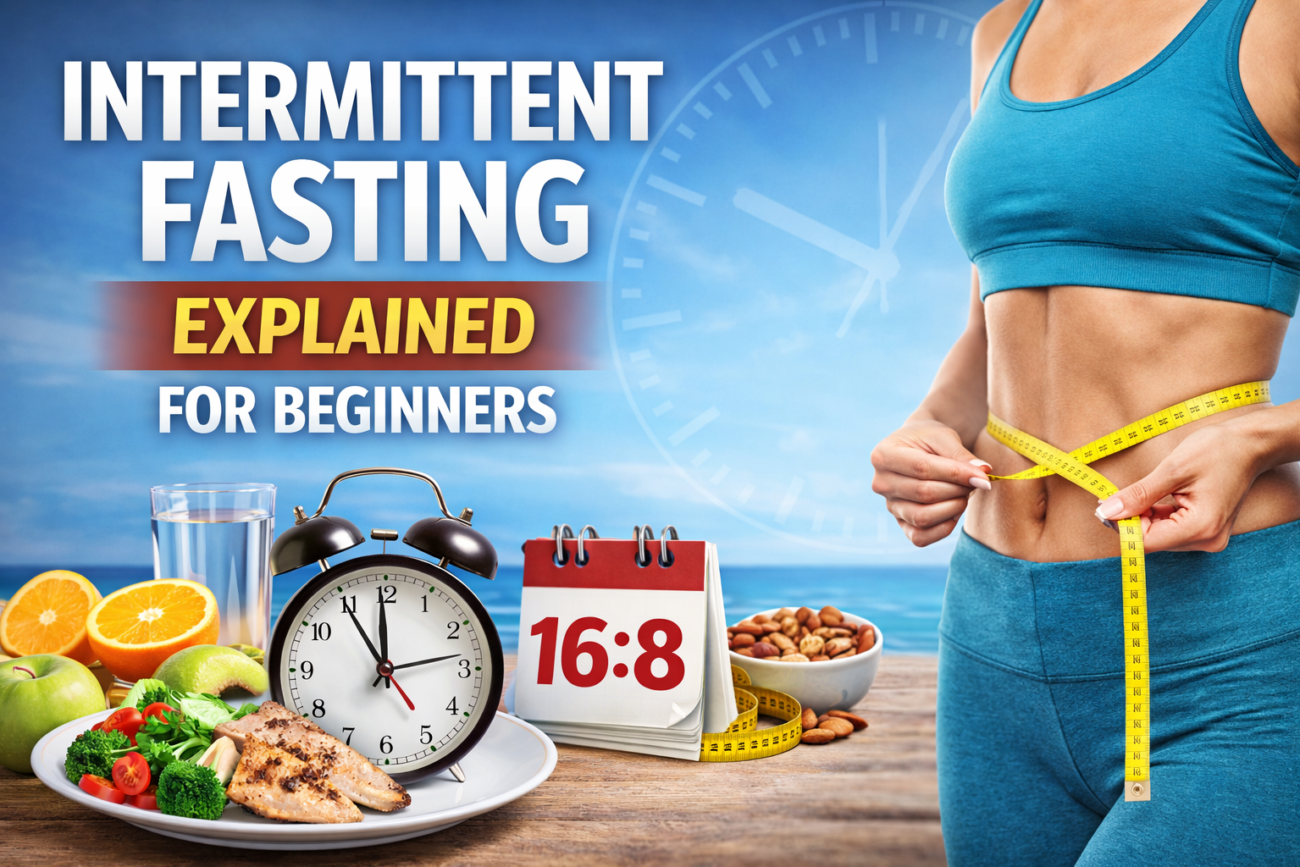
Intermittent fasting has become one of the most talked-about health strategies in the world — and for good reason. People are losing weight, improving their energy levels, reducing belly fat, and feeling better overall, often without following complicated diet rules or counting every calorie.
But if you’re new to it, intermittent fasting can feel confusing.
Questions like:
What does fasting actually mean?
Is it safe?
Will I feel weak?
How do I start?
What can I eat?
Does it really help with weight loss?
This guide explains intermittent fasting in a simple, beginner-friendly way — without hype, without extremes, and without unrealistic promises.
What Is Intermittent Fasting?
Intermittent fasting isn’t a diet.
It’s not about what you eat — it’s about when you eat.
Instead of eating all day long, intermittent fasting creates specific eating windows and fasting windows. During fasting periods, your body gets a break from digestion, insulin levels drop, and fat-burning processes become more active.
In simple terms:
You eat during certain hours.
You fast during the rest.
That’s it.
No special foods.
No expensive meals.
No extreme rules.
No complicated tracking.
How Intermittent Fasting Works in the Body
Your body uses two main energy sources:
Glucose (from food)
Stored fat
When you eat frequently, your body mostly uses glucose.
When you fast, insulin levels drop — and your body switches to burning stored fat.
This is called metabolic switching.
Fasting helps:
Improve insulin sensitivity
Reduce inflammation
Support hormone balance
Activate fat metabolism
Improve digestion
Reset appetite regulation
This is why fasting often feels easier than constant dieting — your body starts working with you instead of against you.
Why Intermittent Fasting Works for Fat Loss
Fat loss isn’t just about calories — it’s about hormones and metabolism.
Intermittent fasting supports fat loss by:
Lowering insulin levels
Increasing fat oxidation
Improving metabolic flexibility
Regulating hunger hormones
Reducing constant snacking
Improving energy efficiency
Supporting gut health
Instead of forcing your body to burn fat, fasting allows it to burn fat naturally.
Types of Intermittent Fasting
There are several approaches, but beginners don’t need complexity.
16:8 Method
Fast for 16 hours, eat within 8 hours
Most popular and beginner-friendly
14:10 Method
Fast 14 hours, eat 10 hours
Easier transition method
12:12 Method
Gentle starter option
5:2 Method
Eat normally 5 days, low calories 2 days
OMAD
One meal a day (not for beginners)
For most beginners, 16:8 or 14:10 is the best place to start.
Best Intermittent Fasting Method for Beginners
The simplest approach:
Start with 14:10
Fast 14 hours
Eat in a 10-hour window
Then progress to 16:8 once comfortable.
Example:
Last meal: 8 PM
First meal next day: 12 PM
Eating window: 12 PM – 8 PM
Fasting window: 8 PM – 12 PM
This aligns naturally with sleep and daily routines.
Beginner Fasting Schedule (Simple Example)
Morning:
Water, black coffee, herbal tea
Midday:
First meal (protein + fiber + healthy fats)
Evening:
Balanced meal
Night:
Stop eating, hydration only
No stress.
No starvation.
No extreme rules.
What To Eat While Intermittent Fasting
Fasting doesn’t mean eating junk during your eating window.
Focus on:
Protein sources
Vegetables
Healthy fats
Whole foods
Fiber-rich foods
Natural carbs
Clean meals
This supports:
Satiety
Energy
Fat metabolism
Stable blood sugar
Hormone balance
What To Avoid
Ultra-processed foods
Sugary drinks
Refined carbs
Constant snacking
Liquid calories
Late-night eating
Alcohol excess
These disrupt insulin and fat-burning hormones.
Common Beginner Mistakes
Many people struggle not because fasting doesn’t work — but because of poor execution.
Common mistakes:
Skipping protein
Overeating junk food
Not drinking water
Poor sleep
Too much caffeine
Extreme fasting too soon
Not managing stress
Expecting instant results
Inconsistency
Fasting works best when it’s simple and sustainable.
Intermittent Fasting Benefits Beyond Weight Loss
People often start fasting for weight loss — but stay for the other benefits:
Better digestion
Improved mental clarity
Stable energy levels
Reduced inflammation
Better sleep
Improved focus
Hormone balance
Reduced cravings
Better gut health
Metabolic health support
It becomes a lifestyle upgrade, not just a diet.
Is Intermittent Fasting Safe for Beginners?
For most healthy adults, yes — when done properly.
It’s about structure, not starvation.
If you:
Eat nutritious foods
Stay hydrated
Sleep properly
Manage stress
Don’t over-restrict
Start gradually
Fasting becomes safe, sustainable, and effective.
Supporting Your Metabolism Naturally
Here’s something important most people overlook:
Fat loss and fasting success depend heavily on metabolic health.
If your metabolism is sluggish, inflamed, or hormonally imbalanced, progress feels slow — even with fasting.
That’s why lifestyle support matters:
Sleep quality
Stress control
Gut health
Hormone balance
Energy production
Inflammation reduction
When these systems work well, fasting becomes easier and more effective.
A Natural Support Option: CitrusBurn Review (Metabolic Support)
Many people combine fasting with metabolic support supplements — not as shortcuts, but as tools that help the body work more efficiently.
One product that has gained attention in wellness circles is CitrusBurn.
What CitrusBurn Is Designed For
CitrusBurn focuses on supporting:
Fat metabolism
Energy production
Insulin balance
Digestive health
Inflammation control
Metabolic efficiency
Instead of acting like a stimulant, it works by helping the body use energy better, which naturally supports fat-burning processes.
Why It Fits Well With Intermittent Fasting
Intermittent fasting creates the environment for fat loss.
CitrusBurn supports the internal systems that make fat loss easier.
Together, they support:
Better metabolic function
Improved energy
Reduced cravings
Better digestion
Faster fat-burning activation
It doesn’t replace fasting — it supports it.
For people who struggle with slow metabolism, low energy, or stubborn fat, this kind of support can make lifestyle changes more effective and sustainable.
How Long Does It Take to See Results?
Results vary, but many beginners notice:
Reduced bloating within days
Better digestion
More stable energy
Reduced cravings
Appetite control
Mental clarity
Weight loss momentum
Fat loss progress over weeks
Intermittent fasting is not about instant transformation — it’s about metabolic consistency.
Final Truth About Intermittent Fasting
Intermittent fasting isn’t a miracle.
It’s not magic.
It’s not extreme.
It’s not punishment.
It’s simply alignment.
Alignment with:
Your metabolism
Your hormones
Your digestion
Your natural fat-burning systems
Your energy cycles
Your lifestyle
When your body is aligned, fat loss becomes easier, not harder.
Final Thought
If you’re a beginner, don’t overcomplicate it.
Start slow.
Be consistent.
Focus on quality food.
Sleep well.
Hydrate.
Manage stress.
Support your metabolism.
Build habits.
Trust the process.
Intermittent fasting works best when it becomes a routine, not a struggle.
Small daily consistency beats extreme short-term effort.
Always.
