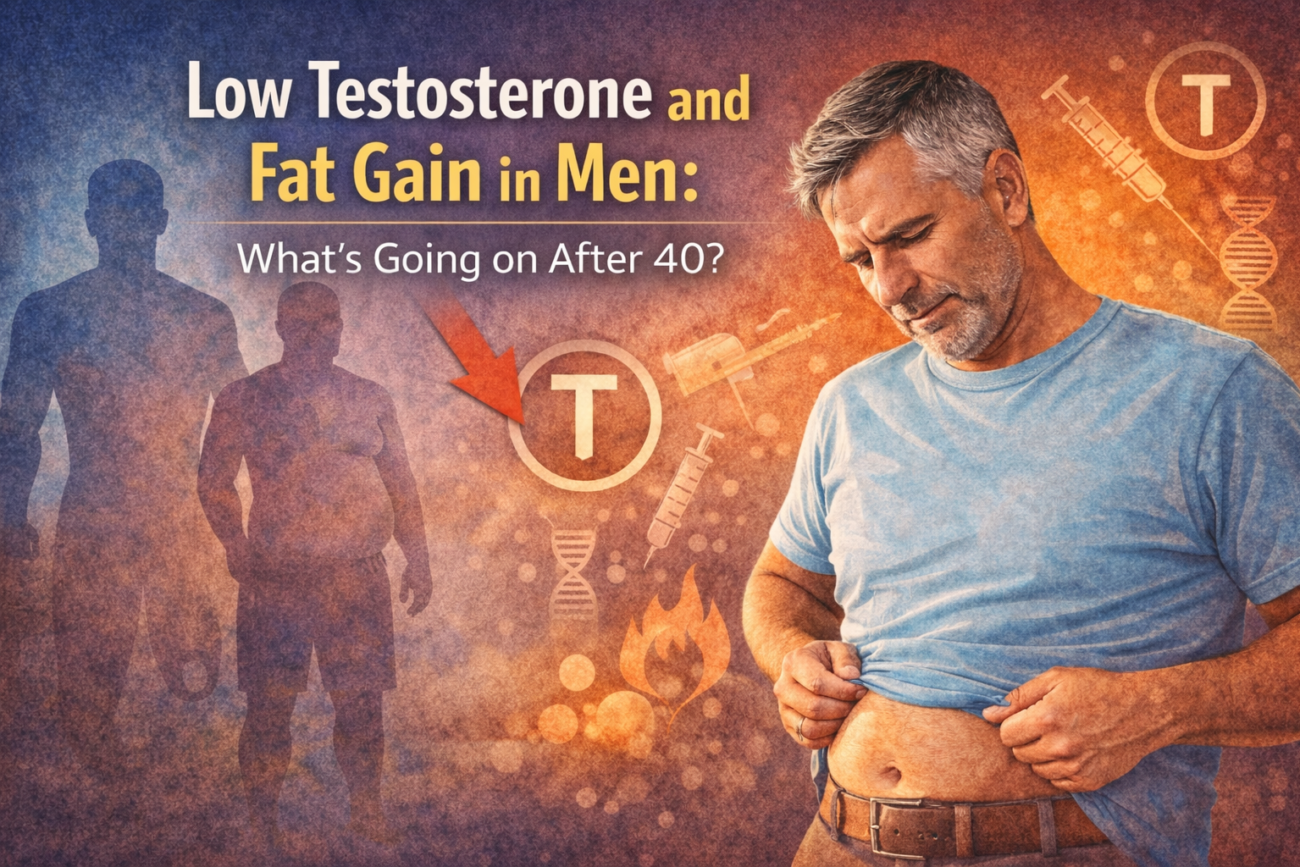
For many men, the changes begin subtly. Workouts feel harder. Recovery takes longer. Muscle seems more difficult to maintain. Meanwhile, fat—especially around the abdomen—accumulates more easily than before. These shifts are often attributed to aging in general, but one important biological factor is frequently involved: low testosterone and fat gain.
Testosterone is more than a hormone associated with masculinity. It plays a central role in muscle maintenance, fat distribution, insulin sensitivity, and overall metabolic health. As levels gradually decline after 40, body composition often changes in noticeable ways.
Within the broader framework of Why Weight Loss Becomes Harder After 40: Causes and Solutions, testosterone represents a key hormonal driver influencing metabolism and fat storage in men.
Understanding Testosterone’s Role in Body Composition
Testosterone supports several critical physiological processes:
Muscle protein synthesis
Red blood cell production
Fat distribution patterns
Insulin sensitivity
Energy levels and motivation
When testosterone levels are optimal, men tend to maintain higher lean muscle mass and lower body fat percentages. As levels decrease with age, this balance can shift.
The relationship between low testosterone and fat gain is bidirectional. Lower testosterone can promote fat accumulation, and increasing fat tissue—particularly abdominal fat—can further suppress testosterone production.
Low Testosterone and Fat Gain — The Biological Connection
The connection between low testosterone and fat gain involves several mechanisms:
Reduced muscle protein synthesis
Increased fat cell storage activity
Decreased resting metabolic rate
Impaired insulin sensitivity
Testosterone stimulates muscle building. When levels decline, muscle mass may gradually decrease. Because muscle tissue burns more calories at rest than fat tissue, this contributes to slower metabolism.
Additionally, testosterone influences how fat cells store and release energy. Lower levels may promote increased abdominal fat storage, particularly in midlife men.
Andropause Symptoms and Metabolic Changes
Unlike menopause, testosterone decline in men is gradual. This phase is sometimes referred to as andropause. Common andropause symptoms include:
Reduced energy
Decreased libido
Mood changes
Increased body fat
Loss of muscle mass
These symptoms often overlap with lifestyle stressors, making it difficult to identify hormonal decline as a contributing factor.
However, subtle testosterone deficiency effects can influence body composition even before symptoms become obvious.
Muscle Loss in Aging Men
One of the most significant consequences of declining testosterone is muscle loss in aging men. This condition, sometimes associated with sarcopenia in men, involves gradual loss of lean muscle mass and strength.
Muscle tissue is metabolically active. When it decreases:
Resting calorie burn declines.
Insulin sensitivity may worsen.
Physical performance diminishes.
This muscle reduction directly contributes to the perception of metabolic slowdown. Over time, even small decreases in muscle mass can meaningfully influence fat accumulation.
Preserving muscle becomes essential for managing low testosterone and fat gain effectively.
Testosterone and Metabolism
The relationship between testosterone and metabolism is complex but well established.
Testosterone influences:
Energy expenditure
Fat oxidation
Mitochondrial function
Glucose metabolism
Lower testosterone levels may reduce metabolic efficiency, meaning the body burns fewer calories at rest and during activity. This can make maintaining a healthy weight more challenging—even if eating habits remain unchanged.
While testosterone decline does not cause dramatic metabolic collapse, it contributes to gradual changes that accumulate over time.
Abdominal Fat in Men Over 50
Many men notice increased abdominal fat in men over 50, even without significant changes in overall weight. This pattern reflects hormonal shifts.
Testosterone helps regulate fat distribution. When levels decline:
Fat tends to accumulate centrally.
Visceral fat increases.
Waist circumference expands.
This “hormonal belly fat” pattern is metabolically active and associated with insulin resistance and cardiovascular risk.
Understanding this shift helps explain why low testosterone and fat gain often present as increased abdominal size rather than uniform weight gain.
Testosterone and Insulin Resistance
Testosterone also interacts with glucose metabolism. Lower levels are associated with worsened testosterone and insulin resistance patterns.
When insulin sensitivity declines:
Blood sugar levels fluctuate more dramatically.
The body stores more energy as fat.
Abdominal fat accumulation increases.
This metabolic interplay reinforces the cycle between fat gain and further testosterone suppression.
Addressing insulin sensitivity is therefore a crucial component of managing midlife body composition.
Sarcopenia in Men: Why Strength Matters
Sarcopenia in men refers to age-related muscle loss that can accelerate after 40. Testosterone decline contributes to reduced muscle-building efficiency.
Consequences include:
Decreased strength
Lower resting metabolic rate
Reduced functional capacity
Increased fat mass percentage
While aging contributes to sarcopenia, lifestyle factors significantly influence its progression.
Strength training is one of the most powerful tools for counteracting muscle loss and mitigating the effects of low testosterone and fat gain.
Testosterone Deficiency Effects Beyond the Scale
The impact of testosterone deficiency effects extends beyond visible fat gain. Men may also experience:
Reduced motivation for physical activity
Slower recovery from workouts
Increased fatigue
Altered mood
These factors indirectly contribute to decreased activity levels, further compounding body composition changes.
This layered interaction helps explain why weight management can feel more difficult in midlife.
For a broader understanding of how hormones, metabolism, and lifestyle converge, see Why Weight Loss Becomes Harder After 40: Causes and Solutions, which explores additional factors influencing midlife weight regulation.
Practical, Sustainable Strategies for Midlife Men
While testosterone naturally declines with age, lifestyle interventions can significantly influence body composition and metabolic health.
1. Prioritize Resistance Training
Strength training stimulates muscle protein synthesis and helps counteract muscle loss in aging men. Even two to three sessions per week can:
Preserve lean mass
Improve insulin sensitivity
Support metabolic rate
Maintaining muscle is central to addressing low testosterone and fat gain.
2. Optimize Protein Intake
Adequate protein supports muscle preservation. Distributing protein evenly across meals can help stimulate muscle-building pathways that become less responsive with age.
This supports metabolic resilience even when testosterone levels decline.
3. Improve Sleep Quality
Testosterone production follows a circadian rhythm and is influenced by sleep quality. Chronic sleep deprivation may lower testosterone further and increase appetite hormones.
Seven to nine hours of consistent sleep supports hormonal balance and body composition management.
4. Manage Body Fat Gradually
Because fat tissue can suppress testosterone production, moderate fat loss may support hormonal balance. However, extreme calorie restriction can reduce muscle mass and worsen metabolic efficiency.
A moderate, sustainable calorie deficit paired with resistance training is more effective long term.
5. Reduce Chronic Stress
Chronic stress elevates cortisol, which can interfere with testosterone balance and encourage abdominal fat storage.
Stress reduction strategies such as regular exercise, social engagement, and structured downtime can support hormonal health.
6. Stay Physically Active Beyond Workouts
Daily movement—walking, standing, light activity—helps maintain metabolic output and supports glucose regulation. Increasing non-exercise activity helps counter gradual declines in energy expenditure.
Reframing Midlife Changes in Men
Experiencing low testosterone and fat gain can feel discouraging. For many men, muscle mass and physical performance are closely tied to identity.
However, testosterone decline is gradual and modifiable through lifestyle interventions. The body remains adaptable.
Rather than viewing midlife as a loss of metabolic control, it can be seen as a period requiring updated strategies.
Understanding the connection between testosterone and metabolism empowers men to focus on sustainable practices instead of short-term fixes.
Conclusion: Low Testosterone and Fat Gain in Context
The relationship between low testosterone and fat gain is rooted in changes to muscle mass, fat distribution, insulin sensitivity, and overall metabolic regulation. As testosterone levels decline, men may experience increased abdominal fat, reduced lean mass, and subtle metabolic shifts.
Yet these changes are not inevitable or irreversible. Strength training, adequate protein intake, sleep optimization, stress management, and consistent daily movement can significantly influence outcomes.
For a comprehensive look at the broader metabolic landscape affecting midlife weight, revisit Why Weight Loss Becomes Harder After 40: Causes and Solutions. Testosterone is a key factor—but informed, sustainable strategies remain the foundation of long-term health.
