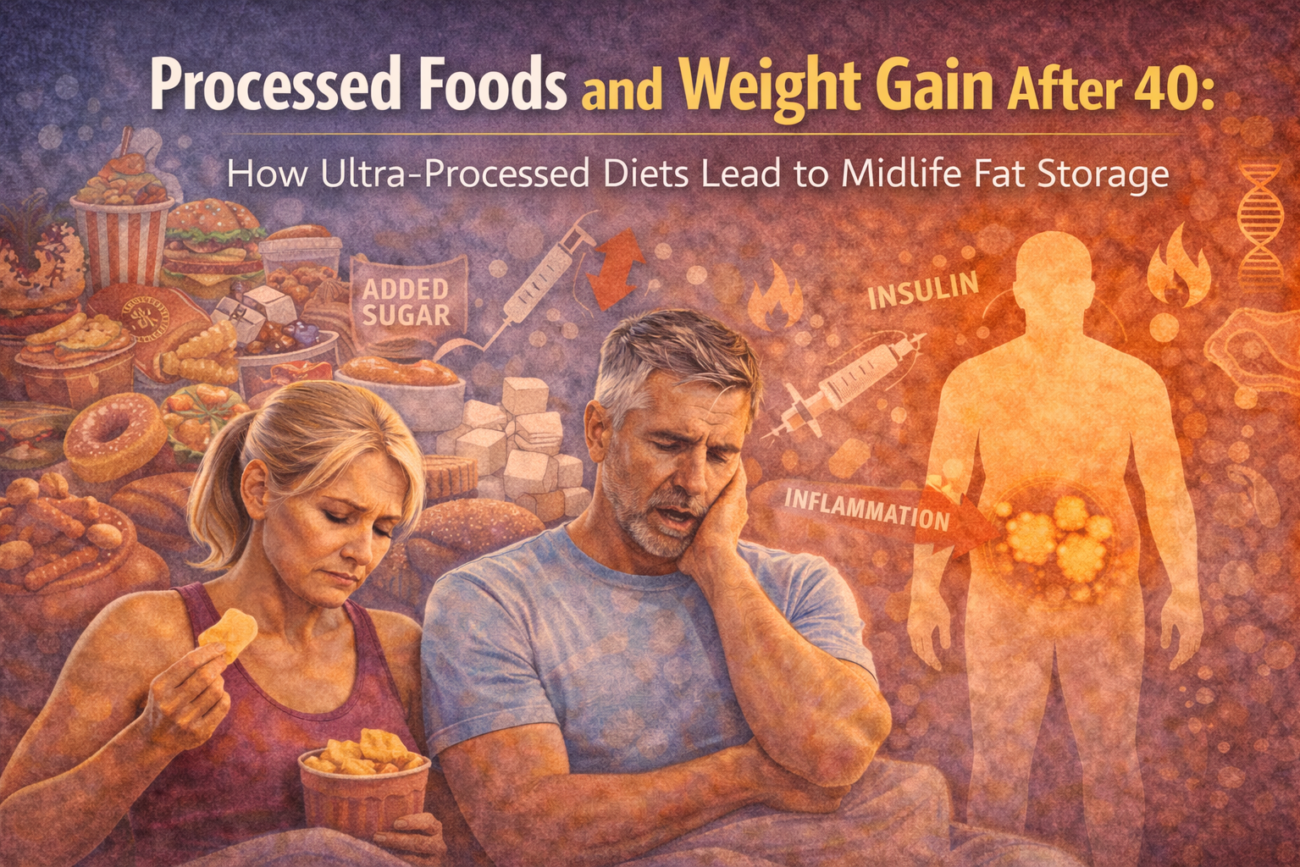
If losing weight feels harder after 40—even when portions haven’t dramatically changed—diet quality may be playing a larger role than you realize. Many adults discover that foods once tolerated without noticeable effects now seem to contribute to gradual fat gain, especially around the abdomen. A major driver behind this shift is the relationship between processed foods and weight gain.
Ultra-processed foods are engineered for convenience, shelf life, and flavor intensity. While they can fit occasionally into a balanced lifestyle, habitual reliance on them can alter appetite regulation, blood sugar stability, and inflammation patterns—factors that become more influential in midlife.
Understanding how processed foods and weight gain are biologically connected allows you to make informed adjustments without extreme restriction.
What Are Ultra-Processed Foods?
Ultra-processed foods typically contain:
Refined grains
Added sugars
Industrial seed oils
Artificial flavorings
Emulsifiers and preservatives
They are often low in fiber and protein but high in calories. These characteristics make them easy to overconsume.
While all foods provide energy, ultra-processed products are designed to be hyperpalatable foods—meaning they stimulate reward pathways in the brain more intensely than minimally processed alternatives.
Over time, this can influence appetite control and fat storage.
Processed Foods and Weight Gain — The Metabolic Mechanisms
The connection between processed foods and weight gain involves multiple interacting mechanisms:
Blood sugar instability
Elevated insulin response
Increased caloric density
Reduced satiety
Inflammation signaling
These factors become more impactful after 40, when insulin sensitivity may decline and muscle mass gradually decreases.
Let’s explore how these mechanisms work.
Refined Carbohydrates Impact Blood Sugar Regulation
One of the most significant contributors to processed foods and weight gain is the refined carbohydrates impact on blood glucose.
Refined grains and sugars digest quickly, causing rapid increases in blood sugar. In response:
Insulin levels rise sharply.
Glucose is shuttled into cells.
Excess energy is stored as fat.
Repeated exposure to high-glycemic foods may promote insulin resistance over time.
The glycemic load effects of ultra-processed meals can therefore amplify midlife fat storage.
Added Sugar Metabolism and Fat Accumulation
Added sugar metabolism differs from naturally occurring sugars in whole foods. When consumed in excess:
Fructose is processed primarily in the liver.
Fat synthesis may increase.
Triglyceride levels can rise.
High added sugar intake is associated with increased visceral fat accumulation.
This mechanism strengthens the link between processed foods and weight gain, particularly in adults over 40 whose metabolic flexibility may already be reduced.
Insulin Spikes From Processed Foods
Frequent insulin spikes from processed foods encourage fat storage. Insulin is a storage hormone; when elevated repeatedly throughout the day:
Fat breakdown is suppressed.
Energy is directed toward storage.
Hunger may return sooner after meals.
Over time, this pattern can create a cycle of blood sugar instability and increased appetite.
In midlife, when insulin sensitivity naturally declines, these spikes become even more consequential.
Caloric Density and Satiety Signals
Ultra-processed foods are often high in calories but low in fiber and protein. This affects caloric density and satiety.
Calorie-dense foods:
Provide large amounts of energy in small volumes.
Bypass fullness signals more easily.
Encourage passive overconsumption.
In contrast, whole foods with fiber and protein increase satiety and slow digestion.
When meals lack sufficient fiber and protein, appetite regulation becomes less reliable—contributing to gradual weight gain.
Hyperpalatable Foods and Appetite Control
Food manufacturers intentionally create combinations of fat, sugar, and salt that activate reward centers in the brain.
These hyperpalatable foods can override natural hunger cues, making it difficult to stop eating even when energy needs are met.
After 40, when hormonal shifts may already influence appetite, hyperpalatable foods can compound dysregulation.
This interaction explains why processed foods and weight gain are not simply about calories—they involve neurobiology.
Food Additives and Appetite Regulation
Emerging research suggests that certain food additives and appetite interactions may influence gut microbiota and hunger signaling.
While research is ongoing, some emulsifiers and artificial ingredients may:
Alter gut bacteria balance
Influence inflammation
Affect metabolic signaling
These changes may subtly influence weight regulation over time.
Although more evidence is needed, minimizing ultra-processed food intake supports overall metabolic health.
Inflammatory Diet Patterns and Midlife Metabolism
Chronic consumption of highly processed foods is associated with inflammatory diet patterns.
Inflammation can:
Impair insulin signaling
Influence fat cell behavior
Alter hunger regulation
Elevated dietary inflammation markers have been linked to increased abdominal fat accumulation.
Because midlife adults are already more susceptible to metabolic shifts, reducing dietary inflammation becomes increasingly important.
Why Processed Foods Become More Problematic After 40
Younger adults often compensate for dietary excess with higher metabolic flexibility and greater muscle mass.
After 40:
Muscle mass gradually declines.
Insulin sensitivity may decrease.
Hormonal shifts influence fat storage.
This means the same dietary pattern may have a stronger impact than it did in earlier decades.
Understanding this context helps reframe the experience. The body is not failing—it is responding differently.
For a broader look at how diet interacts with hormones and metabolism in midlife, explore Why Weight Loss Becomes Harder After 40: Causes and Solutions. Processed foods represent one piece of a larger metabolic ecosystem.
Practical Strategies to Reduce Processed Food Impact
Addressing processed foods and weight gain does not require perfection. Gradual shifts are effective.
1. Emphasize Whole Foods First
Build meals around:
Vegetables
Lean proteins
Whole grains
Legumes
Healthy fats
Whole foods provide fiber, micronutrients, and balanced energy release.
2. Increase Fiber Intake
Fiber improves satiety, stabilizes blood sugar, and reduces glycemic load effects.
Aim to include:
Leafy greens
Beans and lentils
Oats
Seeds
Higher fiber intake supports insulin regulation and appetite control.
3. Pair Carbohydrates With Protein
Combining carbohydrates with protein and healthy fats slows digestion and reduces insulin spikes from processed foods.
Balanced meals prevent dramatic blood sugar swings.
4. Reduce Added Sugars Gradually
Rather than eliminating all sugar at once, identify primary sources—such as sugary beverages or desserts—and reduce frequency.
Supporting healthier added sugar metabolism helps stabilize energy and appetite.
5. Be Mindful of Evening Snacking
Ultra-processed snacks consumed late at night are more likely to promote fat storage due to reduced insulin sensitivity in the evening.
Limiting nighttime hyperpalatable foods can significantly influence body composition.
6. Focus on Sustainability
Rigid restriction often backfires. Instead of labeling foods as “bad,” consider frequency and portion.
A sustainable approach reduces inflammatory diet patterns without triggering deprivation cycles.
Reframing the Conversation Around Food
It’s easy to internalize weight gain as a personal failure. However, the modern food environment is engineered to encourage overconsumption.
Recognizing the biological link between processed foods and weight gain allows you to shift from self-blame to strategic decision-making.
Small improvements in food quality can produce meaningful metabolic benefits over time.
Conclusion: Processed Foods and Weight Gain in Midlife
The connection between processed foods and weight gain is driven by refined carbohydrates impact, added sugar metabolism, insulin spikes from processed foods, hyperpalatable foods, and inflammatory diet patterns.
After 40, these mechanisms become more influential due to shifts in muscle mass, insulin sensitivity, and hormonal regulation.
The goal is not dietary perfection but metabolic support. By prioritizing whole foods, stabilizing blood sugar, increasing fiber, and reducing highly processed snacks, adults over 40 can meaningfully influence fat accumulation patterns.
For a broader exploration of how diet, hormones, stress, and metabolism intersect, revisit Why Weight Loss Becomes Harder After 40: Causes and Solutions. Sustainable change begins with understanding—not restriction.
