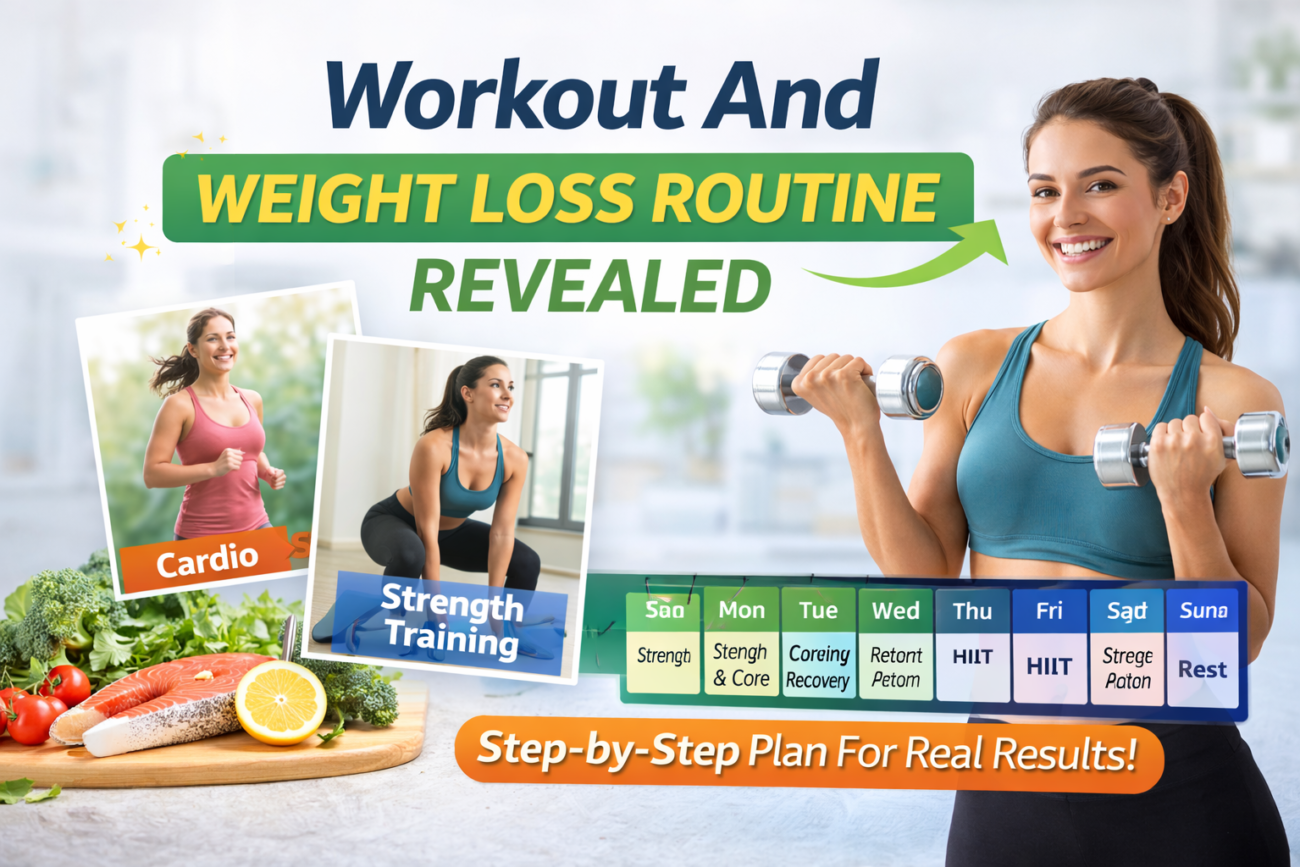
Workout And Weight Loss Routine Revealed
If you’ve been searching for a workout and weight loss routine that delivers real, sustainable results, you’re not alone. Many people start exercising with high motivation, only to feel overwhelmed by complicated programs, extreme workouts, or unrealistic expectations.
The truth? Weight loss doesn’t require hours in the gym or punishing daily cardio. It requires the right structure, consistency, and a smart combination of strength training, cardio, and recovery.
In this guide, we’ll reveal a practical, science-backed workout routine for weight loss that beginners can follow and experienced exercisers can adapt.
Why Exercise Is Essential for Weight Loss
At its core, weight loss happens when you burn more calories than you consume. While nutrition plays a major role, exercise:
Increases calorie expenditure
Boosts metabolism
Preserves lean muscle
Improves insulin sensitivity
Enhances overall health
Strength training is especially important. When you build muscle, your body burns more calories even at rest. Cardio supports fat loss by increasing total calorie burn and improving heart health.
The best workout and weight loss routine combines both.
The Science Behind Fat Burning
Your body uses energy from carbohydrates and fat stores. When you consistently create a calorie deficit through diet and exercise, your body turns to stored fat for fuel.
However, not all workouts are equal.
Strength training preserves muscle while burning fat.
High-intensity intervals elevate metabolism even after your session ends.
Steady-state cardio supports endurance and additional calorie burn.
The most effective fat loss routine includes variety.
7-Day Workout Routine for Weight Loss
Below is a balanced weekly structure that supports steady fat loss without burnout.
| Day | Workout Type | Duration | Focus |
|---|---|---|---|
| Monday | Full Body Strength | 40 min | Muscle + metabolism |
| Tuesday | Cardio & Core | 30–40 min | Fat burn |
| Wednesday | Active Recovery | 30 min | Mobility |
| Thursday | Lower Body Strength | 40 min | Glutes & legs |
| Friday | HIIT Workout | 20–25 min | Intense fat burn |
| Saturday | Upper Body Strength | 40 min | Arms & back |
| Sunday | Rest or Light Walk | 20–30 min | Recovery |
Day 1 – Full Body Strength
Perform 3 sets of each:
Squats (12 reps)
Push-ups (10–12 reps)
Dumbbell rows (12 reps)
Lunges (10 each leg)
Plank (30 seconds)
Rest 60 seconds between sets.
This workout activates major muscle groups and boosts metabolism.
Day 2 – Cardio & Core
Choose one:
Brisk walking
Cycling
Jogging
Elliptical
After cardio, complete:
Bicycle crunches (15 reps)
Leg raises (12 reps)
Mountain climbers (30 seconds)
Cardio improves endurance while core exercises strengthen the midsection.
Day 3 – Active Recovery
Recovery prevents injury and improves performance.
Options include:
Yoga
Stretching
Light swimming
Walking
Rest days are not wasted days. They help muscles rebuild and grow stronger.
Day 4 – Lower Body Strength
Focus on:
Deadlifts
Step-ups
Glute bridges
Calf raises
Lower body workouts burn significant calories due to large muscle group activation.
Day 5 – HIIT Workout
High-Intensity Interval Training alternates short bursts of effort with recovery.
Example:
30 seconds jumping jacks
30 seconds rest
30 seconds burpees
30 seconds rest
30 seconds high knees
30 seconds rest
Repeat 3–4 rounds.
HIIT sessions are short but powerful.
Day 6 – Upper Body Strength
Include:
Shoulder presses
Bicep curls
Tricep dips
Chest presses
Lat pull-downs
Upper body strength supports posture and balanced fat loss.
Day 7 – Rest or Light Activity
Recovery allows your nervous system and muscles to reset. Light movement keeps circulation active without strain.
Beginner vs Advanced Workout Routine
For Beginners:
Reduce sets to 2
Use bodyweight only
Focus on correct form
Prioritize consistency over intensity
For Advanced:
Increase weight
Add supersets
Shorten rest periods
Incorporate advanced HIIT circuits
Progression drives results.
Home Workout Option
You don’t need a gym membership.
Home equipment alternatives:
Resistance bands
Dumbbells
Bodyweight exercises
Stair climbing
Consistency matters more than location.
Gym Workout Option
If you have gym access:
Use machines for controlled movements
Incorporate barbell exercises
Try treadmill intervals
Use cable machines for variety
The environment should motivate you.
How Often Should You Work Out to Lose Weight?
For most people:
4–5 workout days per week
2–3 strength sessions
2 cardio sessions
1 rest day
Results typically appear within 3–4 weeks of consistency.
Common Mistakes That Slow Fat Loss
Doing only cardio
Skipping strength training
Overtraining without rest
Ignoring nutrition
Expecting immediate results
Fat loss is gradual. Healthy progress averages 1–2 pounds per week.
Nutrition Still Matters
Even the best workout and weight loss routine won’t work without proper nutrition.
Focus on:
Lean protein
Vegetables
Whole grains
Healthy fats
Adequate hydration
Exercise enhances fat loss—but diet drives it.
Supporting Your Routine Naturally
Some individuals look for additional metabolic support alongside their workouts. If you’re exploring that option, reading a balanced CitrusBurn review can help you understand how certain supplements are designed to complement a structured routine.
CitrusBurn is promoted as a metabolism-support formula intended to work alongside consistent exercise and healthy eating—not replace them. Like any supplement, results vary, and the foundation should always remain your workout and nutrition plan.
Think of supplements as optional tools, not shortcuts.
Realistic Expectations for Weight Loss
Healthy fat loss takes time.
In your first month, you might notice:
Increased energy
Improved endurance
Slight weight reduction
Better muscle tone
After 8–12 weeks:
Visible body composition changes
Improved strength
Clothing fitting differently
The key is consistency, not perfection.
Frequently Asked Questions
What is the best workout for weight loss?
A combination of strength training and cardio is most effective. Strength preserves muscle, while cardio increases calorie burn.
Can I lose weight with home workouts?
Yes. Bodyweight exercises combined with walking or interval training can produce excellent results.
Is cardio better than weights?
Neither is better alone. Together, they create balanced fat loss.
How long should a workout be?
30–45 minutes is sufficient when structured properly.
How soon will I see results?
Most people notice changes within 3–4 weeks of consistent effort.
Final Thoughts
The workout and weight loss routine revealed in this guide isn’t extreme, trendy, or unrealistic. It’s structured, balanced, and sustainable.
You don’t need to exercise for hours. You don’t need complicated programs. You need:
Consistency
Progressive overload
Proper recovery
Supportive nutrition
When combined, these principles create long-term fat loss success.
Start with the 7-day plan above. Adjust intensity based on your fitness level. Focus on building habits instead of chasing shortcuts.
Real transformation happens one workout at a time.
